"They seemed like ideal infant-caregivers: calm, gentle, patient and sensitive. They didn’t seem like men you would go to battle with. In fact, they were the very antithesis of the warriors and athletes – think Maximus, Achilles or Michael Jordan – often associated with a masculine ideal."
I became a father quite a bit before most of my friends, and so was the butt of some jokes about masculinity for the way I parented (purely just the poking fun between good, old friends), but perhaps as a result of fatherhood, where my former reaction to those jokes would have been embarrassment, my new reaction was to think that my friends were childish for not being able to understand how it felt to be a father who loved his children.
Also, somewhat ironic, but my willingness to "go to battle" for my family is far greater than my willingness to "go to battle" for anything before having a family, to an extent that becoming a father has made me far more assertive, confident, and willing to take responsibility, which makes me more "masculine" if you so happen to define masculinity that way...
I echo this. I’m an empty nester now but when I was raising kids (really early on) most of my friends were going to bars and didn’t understand the responsibility. Now they are all having kids and looking to me for answers... like there’s a manual for kids.
I felt the most pride in my life watching my step-daughter get her diploma. I, a masculine man who was taught to bottle it all up and stuff upper lip, cried like a baby.
Those who have kids know. Those who don’t just will never understand.
> Those who have kids know. Those who don’t just will never understand.
Oh come on, I was agreeing with your comment until this totally unnecessary condescension.
Part of being a mature person (which you imply to claim you are) is the knowledge that whatever you know isn’t necessarily special to your experience, and that other people may arrive at it through a different set of experiences. In this case, being proud of someone whom you love and whose well-being you actively contributed to isn’t an exclusive domain of parents or step-parents, but also of teachers and caretakers in orphanages who are capable of fulfilling the role. “Having a kid” isn’t a requirement here.
Au contraire, maturity entails realizing that if you haven't experienced something, you don't know what it's like. That's certainly true of creating a new human being.
Not the parent but the birth of my kids and their growing up 'caused' a cascade childhood trauma to bubble up. It was overwhelming for months and it messed me up for years, including bouts of depression and lots of trauma purges. Not the kids' doing, just some mirror effect, situations triggering and unlocking memories. And I feel it's even worse if you try alternative, progressive education methods, that give lots of agency to children, that focus on understanding the emotional state of mind, on accepting everyone's emotions without judgement, with infinite patience, the absolute minimum of coercion, and go so much in opposition to the way I was 'raised'.
Not saying I agree with parent that I'd be happier for sure in some ways, but I sure didn't expect so much psychological pain in addition to the hard work of raising kids.
The is very profound, thank you for sharing what to expect. I also share childhood trauma and your perspective on the current generation and state of what is acceptable in parenting as being a little too alien in comparison to my childhood where my parents were manipulative and addicted to their own vices so I escaped playing outside all day with neighborhood friends. Nowadays helicopter parenting, ubiquitous computing/gaming, phone/social media addiction and instant gratification have eroded the working memory of the younger generation. It's only time until we realize it's akin to drug addiction and the smoking kills revelation of our times.
"[...] each time psychology, psychiatry, and psychotherapy have begun to take trauma seriously, it has been shut down by people denying that it’s even a thing, and suggesting that those who are traumatised are making it up or exaggerating its impact. When Freud first published a paper pointing out that most of the people with mental health struggles he was working with had experienced childhood and/or adult sexual abuse and assault, he was ignored and shut down. He went on to shift to a theory that suggested his patients had fantasised those things: they couldn’t possibly actually had happened. This is pretty terrifying now that we know the statistics on the prevalence of abuse and assault."
My new therapist asks 2-3x per session 'but no one raised a fuss with CPS'? What? I was very well treated compared to most kids from my neighbourhood & cohort. I was fed, clothed, and my health was somehow cared for, at least when obviously sick. Sleeping in my own bed in a stable home, a roof over my head. Not to much abuse, at least not everyday. Most of my mates didn't have this luck. The slaps in school by their parents, the pulled hair or ears to obtain compliance, the insults, pushing around, threats of sleeping on the ground or outside, the black eyes, belt scars, the never washed clothes and body, the 'forgotten' breakfasts or dinners, the rotten teeth, the neglected vision problems...
I mean it wasn't Oliver Twist but some of us had it GOOD.
Gimme helicopter parenting and too many activities. The pendulum hasn't swung that much on that side than it had on the other...
Sorry, I hate the 'helicopter parenting' expression.
FWIW I agree about our modern vices. Phones, twitter, HN, everything-gamification...
Yeah for me it was alcohol addiction and escapism, verbal abuse and unloving home environment that really messes with your head as a kid and is hard to understand the long term implications to my mental well being. I am slowly unraveling the issues that manifest themselves in my adult life through guided CBT. Poverty and drug addicted parents was a common theme among my childhood friends.
Good luck on your path and if anything, for all the pain and work and worry kids can be (and twins can be a handful), they're also so much... Love and fun :-) it took some time for me to believe it was directed at me, but love like this is overwhelming and life-transforming.
It doesn't have to be a great perfect day, just two minutes or twenty seconds of a hug with a person who loves and cares for you unconditionally, and you back... It's... powerful. Moving. Like a gift from you to you, and a gift to the world, trying to raise new beaming, can-do, positive-energy to build the world of tomorrow. It sounds silly but I believe the phrase.
I echo this as well. I'll also add that I made very little to no investment in my mental health until becoming a father. My perspective on who I want to be and what I need to do to get there changed practically overnight.
Also, it's not like we're born with DNA testers. There's no reason why our instincts actually know the difference between our biological kids and others we've been with, played the same role with, and raised the same way.
Yes, but it depends on the age of the child when the relationship starts. My half sister was 13-ish about when my father married my mother (so my half sister’s step-mother).
There was always an obvious difference in the way she bonded with my mom vs her biological mom. It’s still family, but more like an aunt at best. Despite never saying it, it’s pretty obvious my mother obviously views us differently as well having basically had no say in any of her step daughters formative years.
That has been found to be empirically not true. As always, there is a distribution (see Homicide by Daly and Wilson, for example). Now, if we know by instinct, smell, or just because we know...
An interesting study might be parents who later learn that their kids aren't actually theirs. Did they treat their kids differently than real biological children? All kinds of ethical issues, etc., but the data would be awesome.
We can assume that nobody treats them better and some will treat them worse. It follows that non-biological parents inevitably treat on average (and, very important, this is cross-sectional, not paired) their kids worse after they know they are not theirs. Directionally, there is little doubt.
Even if you could resolve the ethical issues, the only thing that a study would prove is that “people tend not to care for children that aren’t theirs”, and not “biological relation is necessary for a parent to be able to care for an adopted child”.
I'm assuming he put in literal decades of blood, sweat and tears getting his step daughter to that point. How could you not be proud at the moment of payoff?
Merely producing biological offspring doesn't make then your kid in any meaningful social sense; ask anyone with a parent who bailed real early. Being a child's parent makes them your child, whether they're biologically related to you or not.
The biological relationship we have with our children is probably the least significant part of our relationship with them.
I remember that in the first days after my kid was born, the thought that I would defend that child to the bitter end against any attacker suddenly seemed completely natural, even trivial. It was quite strange and included a sudden extreme awareness of (and aggressive feelings against) animals which came to close. This included dogs. The feelings were overwhelmingly archaic. I talked to my wife about this, she experienced the same. I now understand the aggressiveness of animals who protect their offspring. I felt it myself.
One day it just hit me: "I could totally give my life for this child".
It came out of nowhere and it was a chilling and somewhat unnerving feeling. I never felt that for anyone. But the conviction is there, almost like a peaceful resignation: if there is no other solution and that is the only possible alternative then so be it.
It's funny, this was one of the reasons I always found Harry Potter so overrated.
So Harry has super special invincibility from The Killing Curse because Lily sacrifices herself for him. This is described as "Ancient, Long Forgotten Magic"
Wouldn't literally any parent do this?
Why aren't they're dozens of boys/girls who lived?
Because only in this case did Voldemort even consider sparing a parent. Note that James is already dead and his love is not believed to have any extra power. It was only that Lily had a rare chance to flee and refused to take it that Harry was protected.
(Assuming I haven't mixed up canonical Harry Potter with Methods of Rationality.)
except they are parasites. for women, biologically, the foetus considers the mother's body as the host body and siphons off resources. and thats ok. because the parasite is 50% of host DNA.
all babies are born premature because we evolved quickly and the human female's pelvic bones didnt grow as wide and as quickly as the baby's head to come through the birth canal. even after birth, the human baby needs the mother/father for a much longer time for survival.
progestrone, semen, testosterone, pregnancy etc hijacks not just the blood stream, hormones but also the brain because the fetus basically converts the mother's body into a fortress and a machine to keep itself alive. after birth, the immature baby/fetus also hijacks the father's brain and instincts.
it's best to remember that all biological organisms are mere vehicles for DNA and it's survival instinct. this isnt just for humans. my favourites are insects. at the farm..watch the praying mantis and the tarantula wasp and the drone bees play out their lives changes your perspective on life forever.
The Sphex wasp behaviour is common to most wasps. They are fierce mothers. I have seen it first hand with tarantula wasps in my farm where the female wasp will paralyze tarantula with a neurotoxin. Then she lays the eggs in the still alive tarantula’s belly. It’s insides liquify and after the baby wasps come along, they are nourished by the fortifying soup of the ..wait for it..still-living tarantula’s innards.
I have often wondered if it’s more of a symbiotic relationship rather than a parasitic one because in fairness, the foetus doesn’t kill the host.
Having said that, symbiosis only occurs with two distinctly different species.
With pregnancy and the human fetus, it’s is a kind of quasi-parasitic relationship because the host survives the parasite. Even though it’s changed. (Pregnancy changes body chemistry and functionally not just physical change)
I can totally relate to this. I have always been a completely non-violent person, but I remember the feeling of “I would kill to defend this tiny creature” when I became a dad. It was pretty powerful.
This is also when you realize the insidious power of the “think of the children” argument. When someone manipulates you to think of your own children, they trigger that base instinct that’s hard to fight.
Many of the problems in the world boil down to intentional and unintentional manipulation of basic instincts/ traits/ weaknesses of humans. The biggest way to fight this is simply making people aware of them.
Some time ago a friend of mine from high school asked me how it feels to have a child and what do I feel for them - my answer was: "do you remember the time when you most powerfully fell in love to someone? Multiply that then by 100 and you'll get the answer" :)
This is my very most fav life quote I've ever came up with :)
This protection instinct can be utterly irrational: when my first son was just born, we were walking on a sidewalk and a car passed by, and I felt a slight urge to throw myself in front of that car to protect my family. Of course I didn't, but I did know right then that I would be able to fight and give my life for my family, if necessary.
That urge is what I meant by "overwhelmingly archaic feelings". I hesitated to write this as I am a completely nonviolent person, but at one point, I felt the urge to take out my cheap Swiss pocket knife in preparation to kill a dog which approached the family, in case he attacked. As another commenter has mentioned, this is just something evolution has strongly selected for.
you can made a copy of your code and put it inside a tiny human body. of course, you will defend it with your life! it is what will carry you..or rather a tiny sliver of you into immortality. it's precious because you will die one day but part of your code won't....your child will continue on and hopefully will reproduce to take forward a part of you and so on. we are all meat sacs carrying the code of life.
It started for me the minute they were born. They had to take my first born twin in the next room while the second was coming, and I was so angry and mad, I barely contained myself and stayed bedside with my suffering wife. To this day I'm still so angry about this, and I beat myself I wasn't more of an advocate for my first-born girl...
And then when they wanted to take one or the other away for exams, and I wouldn't leave them alone for a second. No fucking way. Yeah no, you're not taking them away to the nursery, I'll watch and console my girls while my wife gets some sleep.
I know it'll seem strange but there's probably only 2 people in the world I'd leave my girls alone at home with, even though they're 4 now. And none of them are our parents. Some friendly neighbors for acute emergencies, maybe, but the list is short.
And boy, having twins is a sure way to get attention, especially from nosy old people, that will put their face so close to the kids' or will remove the fucking stroller covers to see the baby's face (WTF!) and be angry when you say 'please don't'... I was humouring the old ladies, but my wife was dragon-like.
Its a sudden visceral awareness that you were a host for the DNA thats been passed down from millions of people that came before.
The previous, relatively selfish person you used to be, almost immediately upon first seeing them, now only exists to protect this vulnerable life that's completely dependent on you.
Also, having become a dad, one changes the attitude to the "battle".
Instead of being a brash, brave, showy warrior who just doesnt' care about the danger and only cares about valor, you become a diligent, careful, never-surrendering and deadly efficient warrior, because you care a bit less about valor, but badly need to win. You have some specific lives to protect.
> They didn’t seem like men you would go to battle with... Maximus, Achilles or Michael Jordan – often associated with a masculine ideal.
Funny how often the “masculine ideal” gets ret-conned in ways that say more about the person making the argument than anything else. Achilles is hardly insensitive——the turning point of the Iliad is his mourning over the body of Patroclus.
> calm, gentle, patient and sensitive. They didn’t seem like men you would go to battle with. In fact, they were the very antithesis of the warriors and athletes
IMO this really describes almost everyone, not just fathers. There's a pretty big disconnect between our cultural ideal, and reality. Half of American men are fat whether they have a kid or not.
“Difficult” does not belong with the other two and I’m not sure we need to admire people who have to risk their lives so much as pity them. It’s unfortunate we have so many roles in society that still require that.
I would argue that American males are closer to the warrior archetype than any other democracy. We certainly have fought more actual wars than any other advanced nation, we have the best combat athletes in the world, many of us hunt, shoot and practice warrior like skills. I am hard pressed to think of any other modern society that comes even close.
I think he's overstating how much effect T has on this.
I'm on HRT due to past medical issues that drastically reduced my T levels. I remember what it was like to have my T really low, Now that I'm on T, and probably about normal or higher than average for my age, I can't say its changed drastically my attitude towards my children, how gentle I am towards them and much less increased my willingness or proclivity to leave my family or my wife and seek another partner. If anything its made me more protective and I've had more a sense of duty towards my family, to protect them and be the first line of defense against whatever threats minor and major exist. The worst of it has been a shortness of temper but I keep it in check, its basically like being 20 again and being older and wiser, I can channel it into positive action.
I wonder if he studied fathers who are physically active and do things like weight lifting or MMA, that naturally elevate T levels would agree that the line drawn between animals with higher T and humans are being overly correlated.
I think it true that modern childrearing might have an affect on activity levels, but small changes in T level produce very outsized effects. If anything literature understates the role that hormones play in human cognition.
It’s kind of a weird ret-conning of “of the masculine ideal.” When NASA picked astronauts to be the public face of the technological race against communism, they picked men with families: https://nasa.fandom.com/wiki/Mercury_Seven
> From the 18, the first seven NASA astronauts were chosen,[8] each a "superb physical specimen" with an IQ above 130, and the ability to function well both as part of a team and solo.[6] Grissom, Cooper, and Slayton were Air Force pilots; Shepard, Carpenter, and Schirra were Navy pilots, and Glenn was a Marine Corps pilot.
> Because they wore civilian clothes, the audience did not see them as military test pilots but "mature, middle-class Americans, average in height and visage, family men all," ready for single combat versus worldwide Communism. To the astronauts' surprise, the reporters asked about their personal lives instead of war records or flight experience, or about the details of Mercury. After Glenn responded by speaking eloquently "on God, country, and family" the others followed his example, and the reporters "lustily applauded them."
This is great. In my comment, I almost mentioned that because of how much earlier people historically had children (than most Americans and Europeans do now), most of the people we think of as "masculine ideals" throughout history would have been (were) fathers.
The number of times I read about a famous historical figure on Wikipedia, and they mention almost as an afterthought that they had 6 kids...
But I didn't want to go off on a big tangent about the "masculine ideal" although I agree completely that there is ret-conning and we could definitely use a rethink of how we expect men to act!
I’m not sure who “Maximus” is—if the author is talking about the movie Gladiator, the whole premise of that story is that Maximus is a loving family man who kills the illegitimate Emperor who had his wife and son killed. Achilles had a son who fought in the war against Troy. Hector, who Achilles fought and killed, also had a family, and that’s a key part of his portrayal by Homer. He’s the loyal soldier who fights to protect Troy without any impure motive of seeking glory or power. The whole Odyssey is about Odysseus returning home to his wife and son.
It's self-evident that this must be so. As an evolutionary strategy it's essential to produce a family before engaging in high risk activity like war or space exploration that has a good chance of getting you dead. In the past for many if not all human cultures, most marriageable men that weren't set to inherit had to spend some time doing dangerous things before they had the social standing to marry.
I echo the sentiment as well. I think these are precisely the men you would go to the battle with. The battle to defend the family and the Country. The men who know what they are fighting for.
Maximus is a bit of a strange choice there. Marcus Aurelius of Meditations fame, is the titular grandfather figure in the film (right at the start). Meditations has a lot in it about child rearing and Marcus was something of a devoted father to his many children (for Roman men in those days). All that said, his son, Commodus, the first emperor to have the title passed down to him from his own father, was a uniquely terrible person. As seen in the film, he was just a 'very bad guy', but in reality he was much worse than is portrayed.
In essence, no matter the effort you put into your kid, they are still themselves
> Commodus, the first emperor to have the title passed down to him from his own father
I don't think that's right? Titus[0] succeeded Vespasian in 79 AD, father to son. Both were good rulers BTW, but Titus was succeeded by Domitian (younger brother) who was a disaster and assassinated for it.
I meant to use the old saying of 'born in the purple', in that Commodus was the first emperor born and raised to be one. But I tried to use a simpler way of speaking and was, of course, wrong about it. Thank you.
This from the Wikipedia article on Commodus does indeed seem very bad: "Citizens of Rome missing their feet through accident or illness were taken to the arena, where they were tethered together for Commodus to club to death while pretending they were giants."
> Also, somewhat ironic, but my willingness to "go to battle" for my family is far greater than my willingness to "go to battle" for anything before having a family
I'd bet the "for my family" part is critical to this statement though, and in the modern "Western" world, at least, such circumstances are exceedingly rare.
I'm less inclined to go mountaineering or ice climbing, to give a more realistic example, partly because of the risk, and quality time at home (both with family and alone) is a pretty limited resource.
It is, surprisingly, not as critical as I would have thought. There is something about being a dad that is sufficiently general, the idea that I'm responsible for another person's wellbeing entirely, that made me more confident that I could be trusted with greater responsibility.
And I use the phrase "go to battle" almost as metaphorically as possible, in the sense of my willingness to be in conflict with people over right and wrong, but I think that's a good point about physical safety and quality time.
The actual way people go to battle is by ensuring maximum societal resources go towards their own kids. Moving to suburbs poorer people can’t afford, wealthier people keeping their kids from mingling with poorer kids, etc.
Something similar, but a bit different has happened a few times to me where I've had to show a lot more restraint than I would have previous. With my daughter or without, I now have a responsibility to stay out of trouble. I can't just run in mouth and fist first into any situation.
I've described it as emasculating in the past, but this thread has changed my mind to think about it as more being in control and ready - a man with a purpose.
> Also, somewhat ironic, but my willingness to "go to battle" for my family is far greater than my willingness to "go to battle" for anything before having a family, to an extent that becoming a father has made me far more assertive, confident, and willing to take responsibility, which makes me more "masculine" if you so happen to define masculinity that way...
That's a known fact in the military since times immemorial.
I feel exactly the same way, with respect to "going to battle". Things got much more real after kids, its you they look to when things go wrong and you better have it together.
>Paradoxically, we found that fathers who activate the anterior cingulate the most when listening to infant crying report the most negative emotional responses to those cries, in particular being more likely to label the cry as spoiled or manipulative. How can greater engagement of a brain region associated with empathy be linked with such negative subjective reactions to the cry? We suspect it relates to a phenomenon known as ‘empathic overarousal’, in which an observer takes on the distress of another individual to such an extent that they become mired in personal distress, which in turn interferes with the motivation and ability to deliver compassionate care. There might be an optimal state of arousal and degree of empathy, neither too high nor too low, that facilitates sensitive and responsive fathering.
I experienced this first hand. The newborn phase was really hard for me. I’m glad to know the reason for this, as I’ve always only ever understood it in a handwavy “male postpartum depression” sort of way
If you have enough kids it's kinda a sink or swim moment: you learn to tune it out or go crazy. We have twin 2 year olds and a 5 year old. There's been periods of time where there's crying (by at least one of them) for most of the day. When you're 1 on 3 at these sorts of ages it's inevitable. When 1 starts crying in the car and the other 2 start crying because the crying is too loud, there's not much you can do but laugh about it.
Take solace in the fact that kids cry over ridiculous stuff. For 20 minutes. Because, for example, you peeled their orange for them.
> Because, for example, you peeled their orange for them.
1.5 year old daughter wanted to eat the piece of pasta on the upper right corner of the plate last week. Couldn't manage to get it on the spoon. I helped her, but picked the (equivalent) piece of pasta next to it. The combination of frustration and anger over having to eat the wrong piece of pasta because she wasn't capable to get the right one on the spoon was too much for her. Of course a "dis-un dis-un dis-un dis-un DIS-UN DIS-UN D I S - U N!!!!!" meltdown followed.
I've been there and it's pretty annoying in the moment, but the sometimes I really sympathize with their lack of agency and control over their environment. Littles ones are surrounded by people who can seemingly do whatever they need or want to, while the little one is relegated to struggling to get the piece of pasta they want off their plate.
Not saying this makes it any less frustrating when you need to get them fed, bathe them, brush their teeth, read them a book, and put them to sleep by 7:30 but it's already 7:25 and they're losing their shit over a noodle
Our 3 year old had a total meltdown yesterday because I brought him his toothbrush and toothpaste, but in the wrong hands! When you’re tired it’s so easy to take this stuff personally and then all of a sudden you remember that there’s this little person whose brain is catching up with their emotions and suddenly it’s a lot easier to be sympathetic, philosophical and fascinated, even by the tantrums!
I have three as well (older though, so not the hardship I reckon you guys have now). The dynamic is awesome, but also crazy at times. You learn to turn on/off. If I would be turned on constantly and react to all the noise and yelling I would be mentally dead. You learn to snap on in an instant when shit gets real. 99 times out of 100 it is just small non-essential things though, but sometimes a sound or a lack of a sound makes you 100% focused. But most of the time you need to turn on the noice cancelling inside your head.
It's stuff like this that makes me believe even more in my opinion that the world is just not built for parents. I just cannot believe this is what family life needs to be.
It really isn't. If nothing else, nuclear families and living in isolation are dumb. I'd really prefer to live next door (or in the same house as) a grandparent, maybe uncle/aunt, etc. and we could share the childcare burden - watching 4 kids for half a day would be a lot better than 2 kids all day.
Nevermind that if they play on the street - a perfectly normal activity before cars - a driver will kill them :-(
I believe social and cultural norms changed over last century at least in West and this trend is mimicked by so called "developing countries" making parents isolated, tired and frustrated; add technological burden for kids not spending their developing time running around exploring world but be hooked to single pair or worst single adult because of all the danger increases amount of stress average parent has to cope with.. add to this how unnecessary stressful in some aspects modern became.
So many people led me to believe that I would fall in love with my kid the instant I first laid eyes on her, and it simply wasn't the case. I love her so much now, but it definitely wasn't the immediate flip of a switch that some may believe
I also really, really wasn't into babies before becoming a father, then when they were there, it was actually kinda okay — but now that they can talk, reason and you can mess with them, it's definitely _so_ much cooler.
What's interesting though is that for me, having spent time with a baby seems to have changed some wirings retroactively. Just saw a toddler yesterday doing random things and having so much fun in the puddles, it was reeeeally cute. Good memories.
What nobody tells you though is that annoyingness and cuteness go hand in hand. As soon as they stop being annoying, they also stop being cute. It's hard to enjoy much of that cuteness because life's generally hard, loud and exhausting with a toddler. But as soon as it starts getting better, you also realize how much you miss that will never come back.
As Paul Graham said so wisely: There are only 52 weekends you will ever have with your three year old. Life is short, use it. Or at the very least, try to :)
I think the idea is that your three year old is going to be a very different four year old, who again was different to who they were as a two year old.
Looking back, I think the issue here is that most of the people who give me (mostly unsolicited) parenting advice (VERY MUCH MY PERSONAL EXPERIENCE INCOMING) is sub-urban middle-aged moms, who genuinely have no idea that this reaction is a biological one specific to females and the child-birth process.
There are plenty of things I miss about the south, but unsolicited parenting advice is one of them. Very much a "you're not really an adult" vibes
I’ve never felt that way about any of my kids, nor have my (male) friends of theirs. I don’t know if it’s a guy thing or not. My daughter was the closest I got to those warm fuzzies. My two sons... I found them more irritating than anything else for the first six months or so.
I am a bit late, but I want to add my 2 cents, because I see a pattern here.
My wife had serious complications after birth, so she basically wasn't there for the first 4 months. We had help during work hours, but all the rest of the care fell on me. I woke up 4 times a night to feed our kid, took him with me almost everywhere (in one of these https://media.s-bol.com/RoDEQRlMPRYY/386x840.jpg ), sat with him when he couldn't sleep, etc.
We bonded hard. My wife reported similar feelings like those described in the other comments. It took her a few years to catch up.
It's a really crazy time and it can feel like your life has been turned upside down at first. And there's no going back.
In addition you are very sleep deprived.
I know someone who said "I love him, but I don't like him" in relation to their new born.
It can take a while to come to terms and bond properly. You don't get anything back at the start. Once they start smiling, laughing, etc, it becomes even more magical.
I also wonder if people are talking about different things.
It's difficult for me to overstate the emotional impact at the moment of the birth of my kid. It was intense and powerful. I've never felt anything like it, before or since. There was definitely something there.
But the bond didn't come for me until I could actually interact with this other human being. Offering a bottle and hearing a coo in response didn't really do it. Playing peekaboo was sort of the beginning for me, I guess.
I could definitely see someone conflating or confusing the two experiences.
Same experience. I wrote it off as a big change and sleep deprivation, but there were some days that the cries of my son seemed very difficult to deal with. I hadn't had much experience with newborns/babies prior.
It could also be generalized anxiety. Mine would take uniquely weird forms, including awakening from a dead sleep convinced my son was buried/lost somewhere in the house. I'm convinced that the biological impulse to care/provide for babies is at the firmware-level of our impulses, and, as such, must be something that is acclimated to, rather than controlled by executive function.
Have a sleepwalker. Related to needing to pee. Absolutely will end up anywhere in the house, in any bucket or shelf. Or out the door. Caught her peeing in Landry buckets, on her sisters head, etc.
We have barriers to keep her on top floor. They have to be sturdy.
Moment we can get kid to pee she is instantly fully awake, confused as to how she got there and goes back to bed for the night.
We’ve leaned to sleep lightly. The moment we hear her first stirrings we swoop in and stick her on toilet.
Our kid had night terrors for about a year. Just about the time the random worrying stopped happening we started getting woken up to blood-curdling screams we couldn't really do anything about.
in my culture, during the last few months of pregnancy, the mother to be goes off to her mom's house. all new borns come home to a gaggle of grandmothers and aunts. and cousins. mom will not be sleep deprived. this is the village. as i got older, i had my share of baby cousins to tend and this gives mom time to recover. sleep is a major healing factor.
babies are a group effort. women need their tribe. its an old fashioned way of thinking, but i am only speaking from my lived experiences. YMMV etc. this was also a way for young girls to become familiar with babies and understand pregnancy. once you have seen a live birth and distended nipples and the bloody river of afterbirth, women have a very realistic notion of what childbirth means...its like acclimitizing before entering the death zone while climbing mt.everest. parenthood requires proper introduction before one can jump into it. exposure to other parents..usually family is better for women because one way or another, we are all going to end up with the same blooms and warts as our grandmothers anyways. might as well understand the terrain before entering it. #female perspective.
as far as men are concerned..all i can say is make sure you have a way to earn and support your child. because babies are expensive. how do you prove that you are worthy of being a father? by being a provider, of course. one can always hire a night nanny. but you still need the means to support a child.
I can relate to the anxiety/firmware thing. I had never really experienced that sort of generalized anxiety before, but the weird thing for me was that it was preverbal. So I couldn't even put it into terms like "buried/lost somewhere"; it was more like a feeling. Like the feeling you would get in your stomach if you showed up to an important class one day completely unprepared for a pop quiz. Just that feeling, constantly. Luckily for me it was directly correlated with (lack of) sleep, so once that got better the feeling went away.
My wife and I are working from home and raising our 6 month old daughter, and the -only- distraction that brings me to a grinding halt is my daughter's crying. Even with noise-cancelling headphones, if I hear any crying at all I feel an incredible emotional reaction that totally prevents me from focusing on work until she's calm and happy again. I'm also glad to read that there's a natural (hormonal?) explanation for the disproportionate effect that her crying has on me.
Same here with a 9 month old. I can tune out the general noise, but there are certain cries that 100% short-circuit my brain and dissolve any semblance of focus or ability to concentrate.
Some days, by the time baby is asleep my nerves are just utterly shot by trying to concentrate around the crying.
I don't see this as paradoxical. For babies past a couple months old a lot of cries are actually manipulative, and a more empathetic person can better distinguish them. I think my wife and I started sleeping training our son at around 12 weeks old, and quickly learned to tell the difference between a "complaining" cry that meant he was unhappy but he could probably soothe himself, and a "real" cry that meant he was really upset and needed our attention. Both of those were quite different from the sharp cries that indicated physical pain or something very distressing.
I really dislike projecting the adult trait of "manipulative" onto a baby. Adults manipulate by being underhanded when they have the option of being straightforward. The baby is being straightforward. What do you want the kid to do to communicate? "I am unhappy and while I could probably soothe myself I would like a parent's attention" -- hard to say all those words when you don't have language. What else can the kid do? Get a pet? drink whiskey? send you a text message? call a therapist?
Crying is a baby's only tool, and babies are certainly allowed to feel emotions like boredom, disgust, annoyance, cold, as well as physical pain. You're also allowed to ignore your bored or upset child. But don't call it manipulation when the kid is being absolutely aboveboard and straightforward. Viewing it as 'manipulation' actually increases the likelihood, in my view, that you'll raise a duplicitous child, because from babyhood on the kid'll be taught that saying directly what you want is frowned upon.
As for sleep training, mentioned by a sibling commenter, our reactions to a baby's cries are definitely directly related to kid's bedtime patterns, and I would advocate for a middle road: there's no need to be rigid about a philosophy. With our kid, we'd wait five minutes for crying to stop. Any kid and any adult can wait out five minutes when it's just bedtime, not a question of physical distress. If the kid was still crying after five minutes, check in; if the kid is asleep, win! The kid knows they're not being abandoned for all eternity; you know you don't have to listen to this (*& forever; and we were lucky that it never took us more than 15 minutes (two checkins) before kid fell asleep. Children are different; YMMV.
I think you're right, "manipulative" has negative connotations that aren't appropriate in this context. When a baby is overcome with distress and cries instinctively I think it's important to always soothe them, when they cry as a mix of displeasure and communication then depending on the baby it may not be necessary to rush to them every time.
I don't know why you're being downvoted, it's pretty much documented. I think it's at around 6 months when they start being able to connect the dots... barely :-)
Deception doesn’t require consciousness or reasoning. I feel like there are many different personal definitions for manipulation here and people are just disagreeing indirectly on that.
Deception and manipulation are much different things. In any cases, babies lack the ability to lie or pretend.
You really need to stretch definitions to absurd to get near to deception too. They cry cause discomfort and really have no idea how you will react or what you will think f about that.
Babies are dumb and simple biological mechanisms from this point of view.
Did you have a hard time convincing your wife to do sleep training on your kid? My wife thinks it’s abusive. I think it’s abusive to everyone else in the house not to do it!
From what I see/hear/experience, every kid is different.
As some stranger on the internet said:
"After I had my first kid, I thought I was God's gift to parenting. A few years later I had a second kid and he cured me of such misconceived notions." :-D
This reminds me of Thanksgiving at my brother's house. He has 3 teenage sons, and they were all super helpful while we were there.
My wife asked him how he raised such helpful kids and he said: bribery. If they behaved well and helped with things they would be getting a video game of their choice.
My wife wouldn't entertain the idea. Then the pediatrician pointed out that children screaming in their cribs have a much better survival rate than kids whose parents fall asleep at the wheel because they haven't slept in a week.
That night it took my daughter less than 15 minutes to stop screaming, and then everyone in the house slept for 6 hours straight.
In less than a week she was smiling when we put her down for the night.
Don't know. Thought the same, but my wife said one thing that stuck with me: "Life's short. They'll leave on their own anyway and then you'll miss this".
I gave in and still put our 4 and 6 year olds to sleep in our big family bed, then teleport them later. After being a bit annoyed in the beginning, I've changed my mind by now. Bringing them to bed is honestly the best thing ever.
Whether it is abusive 100% depends on how your kids reacts. Some will stop crying and with cry hard anyway. Others will cry for over 2 hours super strong (and then friend who had such kid decided this wont be done again).
Babies are not copies, they react in various ways.
I read that too and was similarly interested. When babysitting our niece who is <1 year old over night, I was able to handle the incessant crying really well and try to figure out how to alleviate it, or just ride it out while holding her. My wife had to remove herself because it was causing her a ton of distress from hearing the crying. I wonder if she was experiencing this empathic overarousal.
I remember spending lots of time with my nieces when they were newborns and infants, and their cries didn't bother me in the least. Now that I have my own, when my own children cry I most often want to punch a wall.
One aspect of fatherhood that surprised me is what I call the 'rescue response'. I was not able to find any formal information about this behavior, but I have to think there is something out there.
I have experienced this exactly twice in my life on separate occasions: My child entered a physically and immediately dangerous situation. As soon as I saw their peril, my mind went into a kind of flow state. I didn't take time to weigh options, or consider any type of danger to myself, I simply reacted and before I could consider what was happening, I'd removed my kids from the peril. Later, in one case, I noticed I had bruises from my action. In the other, I received a call from the school principal.
Likewise, my father saved my brother and I from drowning, and I believe he had the same 'rescue response'. As soon as he saw what was happening, he dived in from the pier and swam the 30 feet to retrieve us, only to realize that once he had us, he had no idea what to do next. Meanwhile, my aunt had calmly climbed into a nearby canoe and rowed out to assist.
I don't claim this is strictly a father's behavior, or strictly a male behavior, but personally, I haven't had this identical reaction in the few times I've seen other peoples' kids in similar urgent peril. I have taken other action, such as alerting bystanders, but not immediately put myself into danger. I contemplated options first.
I have similar experiences whenever my kids have any kind of medium to high level accident (so to be clear not helicoptering every time they fall over). For whatever reason its like I go into immediate clinical triage mode.
My two year old son ended up breaking his leg stepping off a short stool a couple years ago. My wife thought nothing of his crying but after ten minutes or so she called me while I was upstairs working. I immediately came down and sensed unordinary danger, triaged his leg and concluded it was a broken bone in about 20 seconds, and was off to the ER a minute later (he's fine!). But there is something that just kicks in and says "SOLVE THIS NOW".
I know you acknowledged maybe not just a father thing.
I’ve had two major life in peril crisis with my wife.
First was about 3.5 years ago and started with her sister calling to say they just had a serious car accident which ultimately resulted in my wife being in intensive care for over a week.
The other was in June this year when my wife and I discovered our baby was arriving 10 weeks early.
Gratefully, in both cases everything turned out fine in the end.
But both experiences were very surreal in that in the moment I was calm and just focussed on doing whatever needed to be done.
For the car accident it was only the next morning that it really hit me emotionally.
And for the premature birth, it was only several hours later once everything seemed okay did my wife and I finally take bearings on how we were feeling.
And on the subject of becoming a father. My daughter spent 8 weeks in the hospital but only on the day we bought her home did I finally have the realisation that she is utterly and completely reliant on me and my wife. That was the moment that something changed in me. It was possibly also delayed as the pandemic caused hospital to severely limit visiting time for dads.
Oh yeah it’s a very weird feeling when you finally get home from the hospital. It takes a moment, then you realize that nobody else is there to help. The baby is there, hugely needy, completely dependent, and it’s just up to you guys to handle it. Gulp.
The way I felt it, and the way my father described his feelings in the same situation was "can I really just take this home with me? No one's going to question or stop me?"
I have experienced something extremely similar when a pickup truck blew through an intersection and almost hit my partner and I. I yanked us both out of the way and kind of half-dove backwards -- it took about 20 minutes before I realized I was in a ton of pain (side note: it's a miracle I didn't hit my head).
So I suspect that this is just adrenaline? It felt just like what you've described here.
I've had a similar response. My son wrecked his bike and fell into a creek once and I swear I heard him scream a block away. I ran out to the creek and pulled him out before anyone else in my house even got on scene. There are whole videos of "dad's saving kids." (0)
But it's not just men. When I was very young, before I could swim, I fell into a pool and my grandmother dove in and saved me. She was like a bolt of lightening. I don't have many memories of being young. But I sure do remember that one.
I was shocked how much more _patient_ I became - with everybody - after raising kids. It makes perfect sense, though: I had no choice but to learn relentless patience.
Ironically I spent over a decade in teaching (and about 5 years in a school with lots of pupils with SEND requirements), and then when I met my girlfriend and her 4 kids (who I've now been step-parent of for 10+ years), I was told how patient I was - teaching taught me it first, which was handy as I wasn't patient before... but it's definitely needed with kids.
This is true for me as well. When my child was a few months old something clicked and the constant crying wasn't bothering me anymore. Since then, things that used to irk me are no longer affecting me. But I remember saying to myself that the baby isn't in control and they're not trying to be annoying on purpose, all babies cry (most of them of course) and there's no reason to get annoyed, it won't help me or anybody. I think it helped. Now at most I get a bit stressed out when the crying is very loud and incessant, but it does not register the way it used to. I remember the in first weeks I was a wreck and a lot of it was my own doing, I was anticipating the future distress and was getting annoyed in advance.
+1, I even started to "cry as a woman" after bad dreams or so. That started before the kid was born, even. My kid never had problems to sleep, he is by far more easygoing than either myself or even my wife, so I cannot blame external factors that forced me to be more patient or sympathetic. One basically gets a firmware upgrade when becomes a father.
I became a dad quite late in life, at 55. It's been an eye-opener. After several months I suddenly realized I'd kill and die for this little bundle. Then it occurred to me that most, if not all, of these parents walking around me are the same.
Being a dad has led me to consider it carefully. I've concluded that, since humans are terrible at long-term planning, deferment of benefit, and putting the benefit of the group ahead of personal gain. So Darwin doesn't rely on any of that, or any decision-making at all. Parenting a baby/small child pushes a lot of major buttons in humans. Hard. Like no drug ever. It is its own reward, which is good; children aren't known for their gratefulness.
When we has our first child, it came as a total shock as to the amount of work that was needed. I was completely unprepared for it. Added to my wife’s work schedule and mine, I was stuck between changing diapers and kitchen. I absolutely HATED fatherhood. Did anyone have the same experience and how did you overcome the frustration to become a good father.
I will be the first to admit that becoming a father was a difficult transition. One book that I recommend that all fathers read is The Boy Crisis. With the usual disclaimer that I do not agree with everything the author states, it greatly helped me see what a crucial role I have in raising our kids (my wife and I were blessed with 5 children, including 2 sets of twins). Interestingly, the first baby was by far the hardest transition because we both felt trapped in our new roles. Now that we are a few years in, it has been extremely rewarding to watch our kids mature. My wife and I have spent hours discussing this topic and we agree that fatherhood in general is not well understood in society today. The book helped me to understand my unique role as a father in raising our kids. My wife and I share a similar value system but are often baffled by how different our approach is to parenting. I might sound antiquated but I really think we compliment each other in how we approach our children.
Oh and one side note: the single most important quality of life change that my wife and I made was to get our kids to go to bed early. We now have them all in bed by 7:30 PM so the rest of the evening we have to ourselves. This takes discipline on our part especially after a long day at work but the kids are much happier with more sleep (even though it can sometimes be a battle to get them to stay in bed).
Overtime you will be surprised at how much progress you can make. Try and enjoy the little things in life. Since I'm in medicine, most of my life has been a whirlwind of activity: having kids has forced me to slow down and appreciate life in a new way. One small example, is that the highlight of my week is seeing my kids super excited for the homemade pancakes I make on Saturdays. It gives mom a break :)
Being a father gets better with time and I will say that parenting is the most important and rewarding undertaking of my life, even more so than programming or graduating medical school. Good luck and remember you are not alone there are literally millions of other fathers out there with similar struggles!
Babies aren't meant to be fun. I became a single dad when I had a baby and a two year old. Honestly, I don't think most men are wired for doing this role. The 4-5 years that followed were very difficult for me mentally. I was socially isolated, had no support (all support structures were mother orientated) and I had two really little kids to care for.
I'm not sure if I changed, or it's simply easier for me now they're a bit older, but over time I had merged into this parenting role really well. My kids are both happy and well balanced, other kids and adults both like them and they're doing really well at school.
> Honestly, I don't think most men are wired for doing this role... I was socially isolated, had no support (all support structures were mother orientated)
Maybe it's the social structures that aren't wired for men to do it, rather than the biological ones. What made you feel like the difference was biological rather than due to external society?
Two reasons. The first is that women tend to just like babies. Female friends want to hold a baby but male friends almost never do. Women get "clucky" around them, etc.
The second is that when my youngest was 6 months old I felt nothing for him. I saw a psychologist about this and they said it was really normal for dads to not feel connected to second+ kids until the kids are past a year.
Biologically, I think that there are always going to be more single mothers than single fathers. Women can get pregnant without knowing who the father is. Although formula exists today, men could not feed young babies very well for most of history. These social structures are probably intended to serve a greater number of people, so they serve women better than men.
It is mentally difficult for mothers too. Like isolation, there is reason why the stereotype of woman used to be constantly on the phone. Or taking a lot after husband came from work.
Single parenthood is even harder, it sounds that you have done good job with them.
Sorry, I didn't mean to imply it's not hard on mother's too. I meant that they seem to have a better hormonal reward system with babies. Mother's seem really happy cuddling their little ones and adult women tend to enjoy cuddling babies compare to adult men. I didn't have that same connection with mine so I didn't get reward, at the time, for my efforts.
I did not meant to imply that you implied, you did not.
Just that the a lot of those frustrating and isolating aspects are not that you are less made or less capable for it, it is shared frustration and depression. Tho, advantage of being mom is that you can find other mom to complain to. I agree it is harder for men who are less likely to be in that position.
Hormonal things are more after birth. Moms can also get "touched out" when you don't want touch anymore. Some of cuddling is really done because you know it is good for kids.
I don't want to be the one who will say your experience of being uncomfortable more does not exists. It is way more ok for women to touch other women them males touching other males. These aspects are much different between genders.
Imo, a lot of women specific socialization is really about teaching women how to break isolation etc. It is the thing I realized only after I had kids. A lot of stereotypes were actually adaptation.
My experience wasn't as bad as yours, but the first year was pretty rough. Babies aren't fun. They eat, shit and cry, and that's about it.
The way to overcome it is to sort of just plod on. They grow out of the potato stage, and start becoming people you can interact with, play with, talk with. For the first few years, being a good dad largely consists of keeping your kid alive!
I basically just told myself that it would get better, and stage by stage it did. Mine's nearly five now, and there are still a lot of challenges, but it's nowhere as difficult as it was for the first few years. Being a good dad is actually harder in some ways now now, because it requires more mental and emotional commitment, vs. just being able to deal with sleep deprivation and isolation, but also easier in a lot of ways because they're a person you can do things with.
Please don't attack other users (especially not over personally intimate topics like parenting), and please don't take HN threads into generic flamewar.
I suppose it could be read as an attack on the poster, but I meant it much more as an attack on the expectation of raising kids working out easily in that situation, as indicated in the latter sentence.
Given the context of 'hating fatherhood', pointing that out seems relevant.
I've had the privilege of this experience twice, both girls. I'm 35
The first one, picture perfect. I could feel my body "go to battle" there was this sense of pride and drive. I felt like I was fulfilling a part of my life that was absolutely necessary.
The second one, we failed. Pre-mature by 3 weeks. Bacterial meningitis within 4 days of her being home. She's here with us now but she suffers from global sensory deficits, CP and retardation. It was the polar opposite of my first experience. Pure torture.
The biology of fatherhood is a powerful one, it can give - just as much as it can take.
For anyone who's a father out there, without a connection to their child, especially a healthy one. You're missing out.
For any fathers out there who have had to endure failure, you are not alone and those children need love too.
I just wanted to say something supportive. You didn't fail; a bacteria affected the situation more than modern medicine was capable of handling. I hope you're not blaming yourself.
I've had two law offices, with two separate sets of medical experts all tell me that this did not happen in the hospital. We live in a day and age where critical thought forces you to ask the next question. Well, then where did she get sick, and who was in charge. Sometimes it is that simple.
If there are any parents of newborns here, please read up on the Period of Purple Crying: http://purplecrying.info/
This was one of the hardest times for me as a parent, and it was helpful to know that I wasn't alone. We were given a DVD about this from our public health nurse.
Now I have a teenager, and oh boy, it's a whole new set of problems.
> The bodies and brains of fathers, not just mothers, are transformed through the love and labour of raising a child
There is a clear link in emotional bonding and hormonal changes of mothers associated with pregnancy and labour. At face value it sounds nice that fathers also experience hormonal changes due to bonding with their children.
However, I couldn't find any reference to the confounding of fathers just experiencing a T drop _caused_ by sleep deprivation?
There is a well estabilished hormonal link betwen pregnancy/labour and mother child bonding. [0] My point is that they seem to make the leap that a male equivalent _must_ exist for father bonding.
What I question is if this hormonal change (T drop) in males is not just due to sleep deprivation, rather than some unknown/unclear male bonding mechanism.
The studies are certainly interesting but as Father myself, I would chime in my 2 cents worth:
- less sleep which causes elevated levels of stress which pushes you to eat unhealthy food more, combined with your Body's natural slowdown of digestive system as one ages (compounded by less sleep) will definitely hit Dad's biology quiet a lot for at least the first 3 years of a Child's life.
- Icing on the cake is the hit it takes on Dad's IT career (if Dad is in IT) as he is unable to dedicate meaningful number of after-hours for his skill upgrading.
- Modern Society (at least in Toronto Canada) places unreasonable expectations on Dads to partake in expensive/time-sink activities with their kids such as organized sports and other extracurricular activities as opposed to having kids in neighborhood naturally play at each other's house / local park. This to me is a problem because I am naturally inclined to work and focus on making money/getting promotion rather than extending my family time.
- Raising a Child, especially in a society that is comprised of nuclear family structure and where Grandparents (Wife's Parents) are not geographically near causes immense pressure on both Parents. No wonder, people, especially immigrants in Toronto Canada, rarely have more than 1-2 kids...
If you enjoy this, I'd recommend The Boy Crisis by Warren Farrell and John Gray. A lot of really interesting material on being a dad and specifically parenting boys (but a lot of the benefit also extends to women obviously). At first the material felt a little too "men's rights!" to me, but there really are a significant amount of culture deficiencies in raising men to be fathers.
A dangerous thing that can happen is when you over-identify with your kids. Like being the overbearing sports-parent that pushes their kid to succeed because you see it as an extension of your success. I think every parent runs into this to some degree. I have to remind myself they are different people with their own wants, needs, values, and criteria for what "success" means to them. Not an extension of myself.
Yet it's hard to balance avoiding over-identifying with the "I want to keep you out of obvious danger". Like "Don't go 200K in debt for a poor college education" or things like drug and alcohol usage at too young an age. The downside risks for some of these things are huge.
If you have any resources on how to manage anxiety please bring them on. My old son has a mild development impairment, I am the sole bread earner, and we have no family support (we live abroad).
Honestly, one of the biggest tools I think is in-person school. Which lets the kids get their own space and cultivate their own lives away from parents in a supportive place. Sadly that's been taken from us until Covid is resolved. It multiplies the anxiety quite a bit for everyone: kids & parents. It's hard for us not to be overbearing to our 9 year old about virtual school. It's hard on him, and he's frustrated. It's hard on us because it's time consuming...
Other than that, I strongly believe in paying well for good childcare and babysitting so you can take breaks.
I also believe in sharing your passions with your kids, and focusing on quality time rather than quantity or things that don't interest either of you. This can be surprising. My kids love camping, which surprised me. I love camping - my wife doesn't. My kids are meh on coding, they do it, but it doesn't grab them like it grabs me...
Focus your career choices carefully as your time on them is limited. I have found having kids, due to time crunch, has caused me to really focus more on what I really care about from work. Don't let others take advantage of you to do BS work, focus on what you want to do on a day-to-day basis that's fulfilling for you if you're able. I think sometimes parents fall into the trap of only focusing on $$ when really it's a good idea to focus on how much value you yourself are getting out of your more limited time investment
* A dose of magnesium l-threonate in the morning and before bed
* A dose of magnesium glycinate in the morning and before bed
* A dose of black seed oil in the morning and at night
If you did a hair mineral analysis test, I assure you, you would most likely be magnesium deficient. The body needs magnesium in order to deal with stress. Anxiety is stress.
The deficiency wreaks havoc on the nervous system. Take a HMAT from Analytical Research Labs if you want to be 100%. You'll have to find a practitioner.
I've done years of therapy. But getting my basic nutrients in order, made an immediate impact and has had a much bigger difference in treating my anxiety.
Talk to somebody. A licensed professional would be best, but a significant other or trusted friend will work too. You have to get your thoughts out into the real world so you can process them. Journaling helps with this. Also, focus on your well-being. Make sure you're getting enough exercise, take up yoga, find a productive hobby, etc. If you have a significant other, make sure you stay communicative. As a parent it's easy to sacrifice your well-being for the sake of the family, but the family will work best if you're healthy.
Hang in there! It's absolutely worth all the effort, and things will likely turn out far better than you may think.
I strongly encourage you to talk to a therapist or counselor of some sort - even after just a few chats they can arm you with some really great tools.
For managing the anxiety of life generally and parenting specifically, religion has been very helpful for me. If you're not into that, maybe find something that strengthens the big picture & long term view of things.
I'm tying (unsuccessfully) to get sleep, and I'll try magnesium supplements too. I already spoke about this but never got solutions, and at this point it feels almost even worse every time.
Everyone's talking like they're worried about their kid not turning out like them, or that they'll accidentally vicariously live their life through their kid, or that their kid won't be emotionally equipped to be an adult.
I'm worried that the planet will be inhospitable to human life, and that my kid will have to scramble for rat corpses in the shadows of collapsed skyscrapers.
Me too. Should I push them to win the shitty meritocracy tournament like I did? Or should I encourage them to follow their dreams and perhaps be more fulfilled? I'm leaning toward the latter.
I don’t know what fulfilled means, but my priority is to equip them with the abilities needed to shelter, feed, and otherwise obtain necessities for themselves.
Which, for many people, ends up being participating in the “meritocracy tournament” to secure cash flow. But I let them know what the rules and parameters of the game are, and possible consequences of various actions. After that, it’s up to them to figure out their goals.
To put it another way, should I be like the infamous Tiger Mom and push my child to conform and get straight As, potentially with dire consequences, or should I develop her interests organically, hoping that they’ll find an unconventional path, fully knowing that they’ll be less likely to have a comfortable life? It’s a dilemma for me.
I think there’s a happy medium between Tiger Mom and a hippy parent that doesn’t instill survival skills.
You don’t need straight As and 3 extracurriculars to earn money, but you also can’t explore your interests all day and follow your passion to secure your family’s future.
I would try to suss out what kind of life they want. If they want to jet set and have fancy things, they need to do the things that get them high pay. If they’re okay clocking in and out and going home without stress and maximizing enjoyment in 20s, maybe do a trade or something. If they don’t care about having roommates for the rest of their life and what kind of school district their kids are in, then they can study art or do whatever they feel like.
They should also be made aware that their potential mates will be affected by their lifestyle choices as well.
One of the most important things I feel is to make your child ready for the real world (and not only in terms of education, values, profession, etc) but more from mental make-up:
My daughter is now 3.5 years old, but I can't say I experienced the same. I believe the future of my daughter is bright.
I guess your anxiety could be based on the location where your living? I believe my daughter will be able to find plenty of great opportunities in her life and I'll be able to give her a very nice start compared to most people around where I live (Thailand).
I have to admit I am also not worried for things like covid and climate change, so if these things worry you a lot, I guess that might be part of your anxiety.
I'm not sure if my explanation would be fruitful here. I realise most people on HackerNews likely disagree with me on these issues. I am not here to convince people of my views on these issues. I respect anyones opinions on these matters.
But since you asked, in short:
- I really don't believe COVID-19 is as dangerous as is projected in the media
- I believe the human influence on climate change is much less than what most people tend to believe
My views are based on my own research on these issues.
If you'd asked me what issues I'm worried about, it's issues like pollution in the general sense (e.g. like plastics in the sea) or human population growth.
> - I really don't believe COVID-19 is as dangerous as is projected in the media
Well, it's obviously not very dangerous, on a medium or long term. The Black Plague had a 40% mortality rate, SARS about 20%, etc. A virus with a 1-2% mortality rate won't bring society down, obviously.
The media machine needs nourishment and they tend to exaggerate things.
However Covid-19 is still a big deal. If it runs its course unchecked ~50-80 million of people could die. That's a lot of pain and suffering, the likes of which the world hasn't had in at least 60 years.
> - I believe the human influence on climate change is much less than what most people tend to believe
This, I don't think anyone can justify. Maybe the climate warming estimates are overblown, ok, but human influence is undeniable and worst of all, we have no control over it and little visibility. It's like physics and closed systems, humanity is an open system and we're leaking pollution everywhere. Any way you cut it, that can't be good or sustainable. And there are so many of us that we definitely have an impact on the world. For example the Great Pacific Garbage Patch (https://en.wikipedia.org/wiki/Great_Pacific_garbage_patch). And these things will only become worse as we will have 3x - 4x as many people living in industrialized countries (4 billion people or more).
> - I believe the human influence on climate change is much less than what most people tend to believe
I disagree with this with a resentment towards someone saying its a research based view. Putting that aside, however, why would believing climate change isn't human influenced would make things more palatable? In the vaguest sense, that sounds to me like it would be worse, because then we can't possibly do anything to halt it.
People with your perspective shouldn't be downvoted when merely being asked their honest opinion. It really goes to show the state of both HN and intellectualism in general.
I feel the same. All evidence points to Covid being far less dangerous to children. There are so many other things that are more likely to harm them. As far as climate change, I am worried in general, but I don't think there is anything specific about it that would harm her future. We live in Canada. There will be problems, but we will adapt and figure something out.
My parents lived through the most intense portions of the Cold War. The world could have ended at any moment. That is much more anxiety producing than climate change. And yet they made it through ok.
Honestly, a big concern is how my daughter will deal with things like social media. Young girls are self harming at unheard of rates. Depression and anxiety are through the roof. I don't know how to deal with this.
Covid is about as bad as the flu for kids. Certainly wouldn't want it, but its not the end of the world.
The worst consequences of climate change won't fall on Middle Class Americans, it'll fall on people who cannot afford to move, rely on subsistence farming, etc. Maybe Miami and New Orleans don't exist in 2100. But cities like Chicago were founded and became large cities in under 80 years.
And I'm pretty sure cities like Miami will just slowly recede inward rather than pack it all up.
The way I look at it is that I need my kids to be super smart, hard working, and principled to help extricate humanity from the hole it's currently digging itself into. I can think of many ways the future could suck more than the present, but in none of these scenarios will it be better off without my children, assuming I raise them well.
You know, I've had some bouts of that but I talked myself out of thinking too far into the future. Our children are better off if we don't have anxiety, if we are present and somewhat confident. I am aware the situation is not good but it really won't help at all by being anxious.
I experienced the same. I wound up changing my whole life because of it. Wound up quitting a career, getting involved in IT, going back to college, getting straight As when I had always flunked out before, found myself in an honor society, got recommended for tree internships within the past couple of months. Literally changed my life. Makes me think I should have had a kid sooner.
I remember reading an interesting study around adult bees reversing ageing markers when they where given larvae to look after. This implied some "ageing plasticity"
Interesting summary. Since fathers make unique contributions to the development of their children (eg language development [0] and social skills[1]), it makes sense that the children would also affect the fathers, if they're connected/"there" enough.
Since I'm guessing there will be a bunch of parents in this thread, let me make a humble book recommendation:
Unconditional Parenting by Alfie Kohn
The Myth of the Spoiled Child by Alfie Kohn
Kohn is an education researcher who's kind of an iconoclast. His research has focused heavily on what _helps_ children gain the knowledge, academic wherewithal, and social-emotional skills to be successful in life. His results have been pretty surprising: Homework doesn't do much for children. "Time outs" are harmful. And the list goes on.
I'm simultaneously reading Unconditional Parenting and The Myth of the Spoiled Child, which I'd recommend. The latter looks at American accepted wisdom about children (every generation thinks that their kids are dumber, lazier, and more mollycoddled than _they_ were) and makes some pretty interesting juxtapositions between what we say we want for our kids and how we treat them.
I agree with most of the comments here as a semi-new father, so I won't rehash then, but I really wish more people could experience the emotions and struggles of parenthood sooner, I think it makes a person realize what's important in life and causes one to mature quickly. I think people would be nicer to one another if they could be a parent for a year, at least.
How do we forget every time there are these conversations that most abuses happen in families? How do we forget about the victims of parental harassment, shaming, disinterest and violence?
I don't know whether being a parent makes someone better or worse; but there are many parents who should have done something different that lazy Sunday afternoon.
I just figured the shitty people are already shitty now, but a lot of people become better after they have kids, so it might be a net gain if more people had kids earlier, since they might become better people earlier. You are right there are shitty parents, but I think parenthood generally makes for a more mature person, on the statistical whole.
Either way, it would be nice if people had to think about the care and feeding of others more often, so they might be less selfish after having seen how important a job it is to take care of another human with care and respect. Maybe even if people could take care of the elderly, it's a similar struggle to take care of a very old and enfeebled person.
> it might be a net gain if more people had kids earlier, since they might become better people earlier.
Maybe. I was not ready to become a father early in life; I can't tell you if it would have taught me patience earlier, or would have made me resent the responsibility and poisoned my relationship with my kid.
And overall, I think that prescribing having a child to mature people faster fits into the same bucket as having a child to save a failing relationship.
> it would be nice if people had to think about the care and feeding of others more often
Perhaps we can get young people more dogs. Or a fish.
I'd be curious to see a study on whether pet-parentship has some of the same chemical effects. Oxytocin obviously comes into it, and since having a dog I've found myself developing certain parental instincts. I had a realization the other day that for the first time in my life, I knew I would put myself in harm's way without a second thought if I had to.
Funny because I was thinking about something similar to this for almost the whole of last week. I'm convinced men and women are equally capable of parenting but something is different. I still don't know what it is and the article postulates some interesting physiological connections but not quite hitting the right spot.
But I might just be paranoid or an idiot unsure if he will be a good father or not. Men plan, the gods laugh.
This lowering testosterone thing - does this explain the decline of athletes when they become parents? I don't know if a 20% decrease in testosterone has a material effect on the body's ability to produce and maintain muscle mass.
Any Doctors out there? Does it explain the dad-bod?
I wasn't aware you could just give someone oxytocin via a nasal spray. That seems like it would be a pretty effective antidepressant. Sometimes I really feel like I just need a hug... Why don't they sell that stuff over the counter?
Oxytocin has this wonderful effect of increasing pro-social behavior and reward response towards people that one identify as in-group. The drawback however is that a similar effect occur to our behavior towards members of the out-group, but with the effects of fear, lower pro-social behavior and lower rewards.
It could have some problematic effects if given as an antidepressant.
I will make a shameless plug for marriage. While it is obviously not foolproof, and can go bad just as swiftly as no marriage at all, it is still a good signal of commitment in a partner. If your partner desires to be married (not just to please you I might add) then at least at face value he desires commitment. It isn't just an idle ceremony but a contract and vows with family and friends witnessing ideally to hold you to account.
Maybe remembering the fathers that after his kid is born there is a "hell" time of mostly 3-4 months where the baby will be adapting to you and vice-versa.
Then the baby sleeps gets longer and you can have 6-8h of sleep.
New fathers: Hold tight, after 3-4 months it gets way easier.
In my experience it's a lot longer than 3-4 months. Or perhaps it's hell for 3-4 months, then just purgatory for another couple of years. I have a 4-yo and 2.5-yo and my sleep has still not recovered. Just last night one of them woke up screaming, and this continues to happen about weekly. Being woken up in the middle of the night is one thing, being woken up in the middle of the night to the banshee screams of a young child is quite another.
This rhymes with my experience. My 4.5yo only wakes up when she's sick but my 2yo wakes up at least once a night almost every night. Last night was the first time in weeks where she didn't, but then of course my body has been trained to respond to her so I didn't sleep well.
Seconding this. It wasn't until she turned four that we could assume that we would sleep through the night, instead of vice versa. Takes a long time for the exception to become the rule.
My wife and I had two queen sized beds, I slept on one, and our infant and my wife on the other. We coslept and my wife breast fed ad libitum. People kept asking me if I was tired, and I was confused about what they meant. I remember her once commenting "it's so amazing, she (our daughter) sleeps through the night without feeding!" to which I replied, "no, she makes a small fuss and you roll over and pop a boob in her mouth"! Wife wasn't even aware it was happening, and we were well rested and happy.
On the downside, breast feeding ad libitum basically meant my wife's full time job was to breast feed, we went on a date after our kid was a few months old and we had to cut it short because she was sore and it was feeding time. She estimates she spent 40+ hours a week breastfeeding. She played a lot of video games with our daughter latched on, since it could be pretty boring.
Like any parents, we had a few "hell nights" when she was sick or teething, but in general human infants are significantly happier (and much quieter!) sleeping next to their mother, and unless a mother is either drunk or under the influence of some other substance, you're not going to crush your baby. I slept significantly more soundly and slept in a different bed. Putting your kid in a crib in a different room is a very weird, Victorian thing to do.
I respect your choice; I suggest that you may try doing the same for people putting their kids in cribs instead of calling it weird and Victorian - because studies show it to reduce infant deaths; and it is practiced widely across the World, not just Victorian England. It is not weird for a parent to choose something that is shown to be safer for their infant. Again, I respect co-sleeping too; you had a queen just for baby and momma, and seem to be attentive and amazing parents. Some parents may be heavier sleepers though! I think there are many ways to be a good parent. Different room is also associated with higher risk though in the first 6 months ~ ideally crib is in a room with a parent.
Yeah, but at that point it's kind of out of your control. You've probably provided 95% of the guidance you could have provided and they're almost grown-ups.
I understand the attachment, but at some point you have to let go and life is full of risks (and interesting things).
Though I doubt my reasoning will assuage any parental fears :-)
It gets better after 1 years, then gets better after 2, and so on. Especially once they become autonomous and self-sustaining and you can reason with them using words. Then it's absolute rewarding bliss and frustrating chaos all at the same time.
Well, I've got both of mine... but then, I always wanted kids. Their mom was biggest part of the issue. That's why I have them at every possible opportunity - which translates to: If I'm home, which I am most of the time, they're most likely with me.
Some people will stick around and some won't. I would avoid those who won't like the plague, not just as a potential significant other but even as a friend. I'm not saying that everyone who has lost custody of their child or doesn't see their child much is a horrible person, but I am saying that those people who aren't even _interested_ in raising their own children are not generally the kind of people I want influencing me. Parenthood is difficult, some people try really hard and it beats them, and there shouldn't be any shame in that, there should be help. I'm also not talking about people in that category.
For the most part: Choose a male mate that has qualities which signal or are correlated with their likelihood to stick around afterwards and be a good parent. That would increase the likelihood of them staying (barring unexpected external factors to the dynamic). You can't just "magically" make people want something they don't want to, nor can you force them (you can see that with things like child-support payments).
But I think the majority of cases could be covered by these two things: (1) Choose the right person; don't expect that someone will magically change after the kids are born. (2) Don't let your partner feel like a fifth wheel, or rather like a mere money machine, after the kids are born.
From the article there are actually a number of weak correlates: a man with smaller testes, for example. But it concludes with the prefrontal cortex being the largest discriminator, all other factors considered. It would seem that picking a partner who is capable and willing to use rational thought to override emotional responses would be a successful strategy - more capable of dealing with the frustrating reality of childcare, less likely to leave in search of another mate.
Help them face the problems, emotions, and ways of thinking in their own life that are holding them back. Then they will be more prepared and excited to expand this practice of care outward, starting with those closest to them such as immediate family. Far easier said than done. It can take years.
Accept that there is a training process, some men are willing to take lessons from their partner and some aren't.
Also, regarding your friend's children... I know two adults who turned out to be very successful in life and in their careers despite having fathers that abandoned them at a young age.
If you're still at a point in life where having children means "sacrificing your happiness", then you probably shouldn't be having children yet anyway (assuming it's a case where you're making a conscious decision on the matter). That's not a healthy starting point for either party.
I didn't expect to see similar proportions of children both living only with mother and only with father. In fact, 12 to 17 years of age is 44% only with father versus 36.6% only with mother. Not only do more teens live with their father only, but only 20% live with both parents?
That's not the correct conclusion, the percentages add up to 100% for both the single mother and single father parent cohort, but it doesn't say anything about kids who are living with both parents.
Oh, yes, I grossly misinterpreted what that meant. It’s “of the children living with one parent, these are how the ages are distributed within mother only and father only households.”
Your perspective indicates perhaps a bit of spoil... I think it's totally fine to not want children but thinking of them as spoiling anything by their existence feels to me as profoundly wrong as thinking of... well, a person as spoiling anything by their existence.
Perhaps he was referring to something more physical as in her body being unspoiled. But I totally agree with you, nobody forces people to have children and the ones who have them by accident and hate it afterwards is clear they have not reached a maturity level or preparedness for being a parent and there's nothing wrong with it at all, people have choices. But ones who consider children spoils or as curses or burdens or thieves of their unmitigated freedoms they used to have prior, it's probably for the better to never have children for they would be neglected or maltreated one way or another.
Thinking of your significant other's body being spoiled by childbearing is almost as bad as thinking of children's existence as spoiling things. Maybe worse.
Obviously, to each their own. But what do you mean by your wife being unspoiled? The way you expressed yourself you make it sound like she's still a maiden.


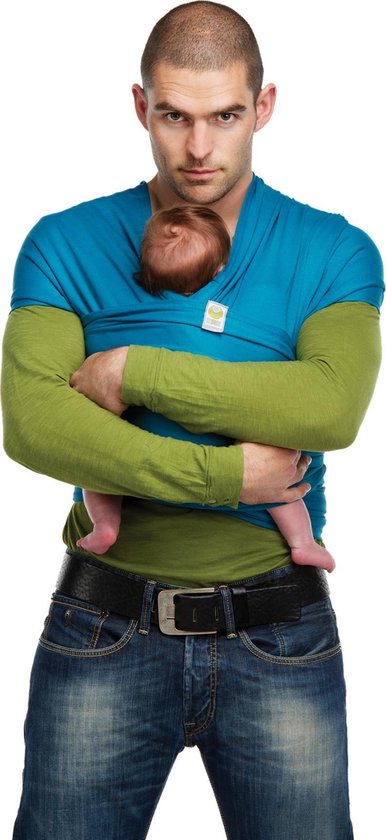
I became a father quite a bit before most of my friends, and so was the butt of some jokes about masculinity for the way I parented (purely just the poking fun between good, old friends), but perhaps as a result of fatherhood, where my former reaction to those jokes would have been embarrassment, my new reaction was to think that my friends were childish for not being able to understand how it felt to be a father who loved his children.
Also, somewhat ironic, but my willingness to "go to battle" for my family is far greater than my willingness to "go to battle" for anything before having a family, to an extent that becoming a father has made me far more assertive, confident, and willing to take responsibility, which makes me more "masculine" if you so happen to define masculinity that way...