I do not like charts like this because their existence implies that cost per user somehow matters, or is a deciding factor even, in the price of an acquisition.
Even if that was the major metric in determining a price, there's often a very large difference between the number of users currently and the expected number 1 year or 5 years out.
You don't buy a company because of the number of users it has right now. You buy it because you think you can do something better with it, or to be defensive in a field, or to expand your own customer lists.
What's more, not all users are created equal! When Flickr for instance was aquired, what percentage of users were paying users?
I think its hard to make any real generalizations here, but better than a chart of cost per user, I think this is probably closer to a chart of how badly Company X feels it needs some audience. It's some formulation of growth, panic, defensiveness, etc.
their existence implies that cost per user somehow matters
Well, it does matter, after a fashion, and it's a one (of many) metrics that an acquisition can be considered on.
I found it interesting to look through the list for obvious winners and loses, and actually, that would be a much more useful plot: showing the cost-per-user on one axis against, say, the 3-5 year investment performance on the other.
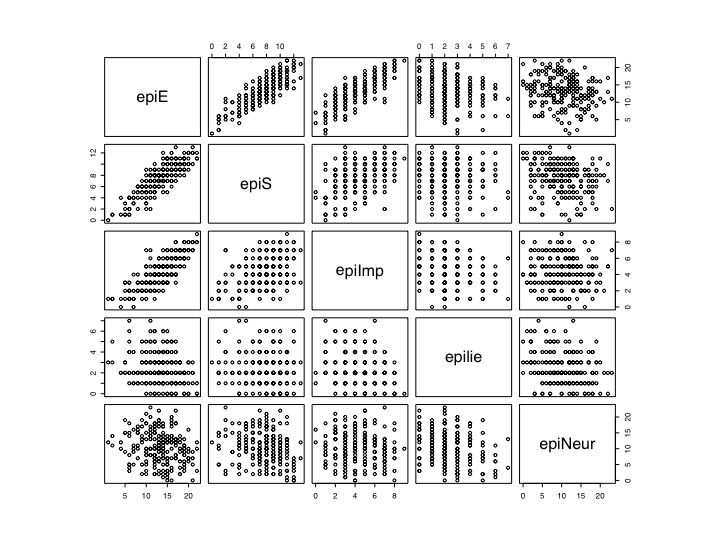
Actually, better than that even would be to look at a number of dimensions and plot these against one another looking for patterns in the data. R is particularly good at this with its scatterplot matrices:
Fair point, but like it or not, cost per user matters.
- When investing in or acquiring companies, people may use this metric in addition to price/sales or in rare cases for tech companies price/EBITDA valuation multiples. It forms the basis for comps analysis which bankers, M&A types and VCs do all the time.
- Companies use the ratio in similar ways when fundraising or talking to acquirers. "Based on how many users we have and comparable transactions, we're worth $X million"
- While you may buy users looking forward, you also may look at how you can "monetize" existing users, i.e., if we can get $X per existing user, that would be worth Y.
It is of course not the only metric that an acquirer evaluates (at least the good ones), but they do look at it as do investors, bankers and startups. So good or bad, it is here to stay.
>When Flickr for instance was aquired, what percentage of users were paying users?
Probably a lot more than there are now. As a former paying user of Flickr, Yahoo really stopped all development for about five years. Now, I have no reason to upgrade to a pro account.
Customer acquisition is actually a very big cost. If you're able to compute the lifetime value of having a customer you can easily make an economic argument if the acquisition makes "sense" or not based on that.
I am amazed at how well that particular calculation works some times although I understand the statistics.
Also, the metric amuses me since it implies most of the value of a tech acquisition is in the users, not the actual tech or talent being acquired. Or the timing and context of the acquisition. Is this trying to say Whatsapp was a good deal? lol.
One way this chart could be useful to an entrepreneur is to estimate a ballpark their startup in a certain market would fetch if they sold it. The number of active users or leads is monetizable in a sale, and can be one of the assets.
Overall I think there are a lot of factors, many that we the public are not privy to, that form the basis of these deals. All of this analysis and speculation is a form of entertainment. And that's fine I guess...


Even if that was the major metric in determining a price, there's often a very large difference between the number of users currently and the expected number 1 year or 5 years out.
You don't buy a company because of the number of users it has right now. You buy it because you think you can do something better with it, or to be defensive in a field, or to expand your own customer lists.
What's more, not all users are created equal! When Flickr for instance was aquired, what percentage of users were paying users?
I think its hard to make any real generalizations here, but better than a chart of cost per user, I think this is probably closer to a chart of how badly Company X feels it needs some audience. It's some formulation of growth, panic, defensiveness, etc.