Mm..cool but the last part where any civilization that has night lights would by definition burn all the fossil fuels and turn the place into a desert seems like an assumption based on only one possible trajectory of our own civilization, let alone all other possible alien civilizations. There's nothing to make death by warming and desertification any likelier than nuclear war or the development of clean fusion, or a plague or an invasion from another nearby procedurally generated earth-like planet.
Basically it's a cool sim when it's trying to simulate stuff that actually happened, and before it gets opinionated.
Moreover, it apparently equates heat with dryness, and also doesn't take into account the effect of additional CO2 on plant life. It is called a greenhouse effect for a reason. It's quite possible the equatorial belt could heat up to where it's uninhabitable by humans but overrun by jungle rather than desert.
While I have some doubts some of your statements your comment still resonates.
Unfortunately, we live in an “Excel world”. The predominant thinking is that our highly complex world can be modeled into an excel sheet. And based on the outputs we should make decisions.
This approach mostly ignores the second order effects you describe.
The issue is, the locations where most humans live today, grew historically from the best spots our ancestors could find in the whole planet, taking many factors in consideration: proximity to water bodies, good climate, good agricultural lands, adequate rainfall, et cetera. These are not random locations, they grew around the best spots available. If climate changes, they tend to regress toward the mean, diminishing carrying capacity. Other places may even improve, from the POV of human habitability, but statistically those will not be the same we have a lot of people living today, but places like siberia, that historically were population voids, prompting the need for mass migration and mass resettlement in a world that is already full of borders, and all the associated problems this entails.
You are reading too much into my comment, i was just talking about the simulation being dumb.
But here’s a question for you, total arable land increases or decreases with a warmer wetter world? (We must consider soil as the soil in eg norther Canada is garbage and would take a millennium to improve)
A slight decrease is likely (~-5%). Output gains in cold regions are not expected to match losses from regions that will get too dry/hot, unless artificial irrigation use expands, putting further strain in water resources:
> Annual food caloric production is the product of caloric yield, cropping
frequency (CF, number of production seasons per year) and cropland
area. Existing studies have largely focused on crop yield, whereas how CF
responds to climate change remains poorly understood. Here, we evaluate
the global climate sensitivity of caloric yields and CF at national scale. We
find a robust negative association between warming and both caloric yield
and CF. By the 2050s, projected CF increases in cold regions are offset by
larger decreases in warm regions, resulting in a net global CF reduction
(−4.2 ± 2.5% in high emission scenario), suggesting that climate-driven
decline in CF will exacerbate crop production loss and not provide climate
adaptation alone. Although irrigation is effective in offsetting the projected
production loss, irrigation areas have to be expanded by >5% in warm
regions to fully offset climate-induced production losses by the 2050s.
Control F precipitation not sure why my mobile Safari won’t let me copy paste, but they specifically say that they don’t count for precipitation changes because it’s too complicated and in the future they might try doing that…
For what it's worth, the simulation does account (in a crude manner) for the heat causing increased water vapour uptake from the ocean and accelerated plant growth (which in turn increases the rate of carbon sequestration). I admit that the desertification at the end is a bit of artistic license to make the storytelling easier to visually convey, realistically things would be more complex than that. And it is just that, a story of one particular possible scenario, as I've written about elsewhere:
> “The final section is intended to illustrate a possible future, though perhaps an improbable one,” Roberts said. “I wanted it to be dramatic, so it is an illustration of a particularly extreme outcome where literally all of the fossil fuels are burned, but I tried to keep the effects realistic otherwise, based on scientific articles I've read about such a hypothetical.”


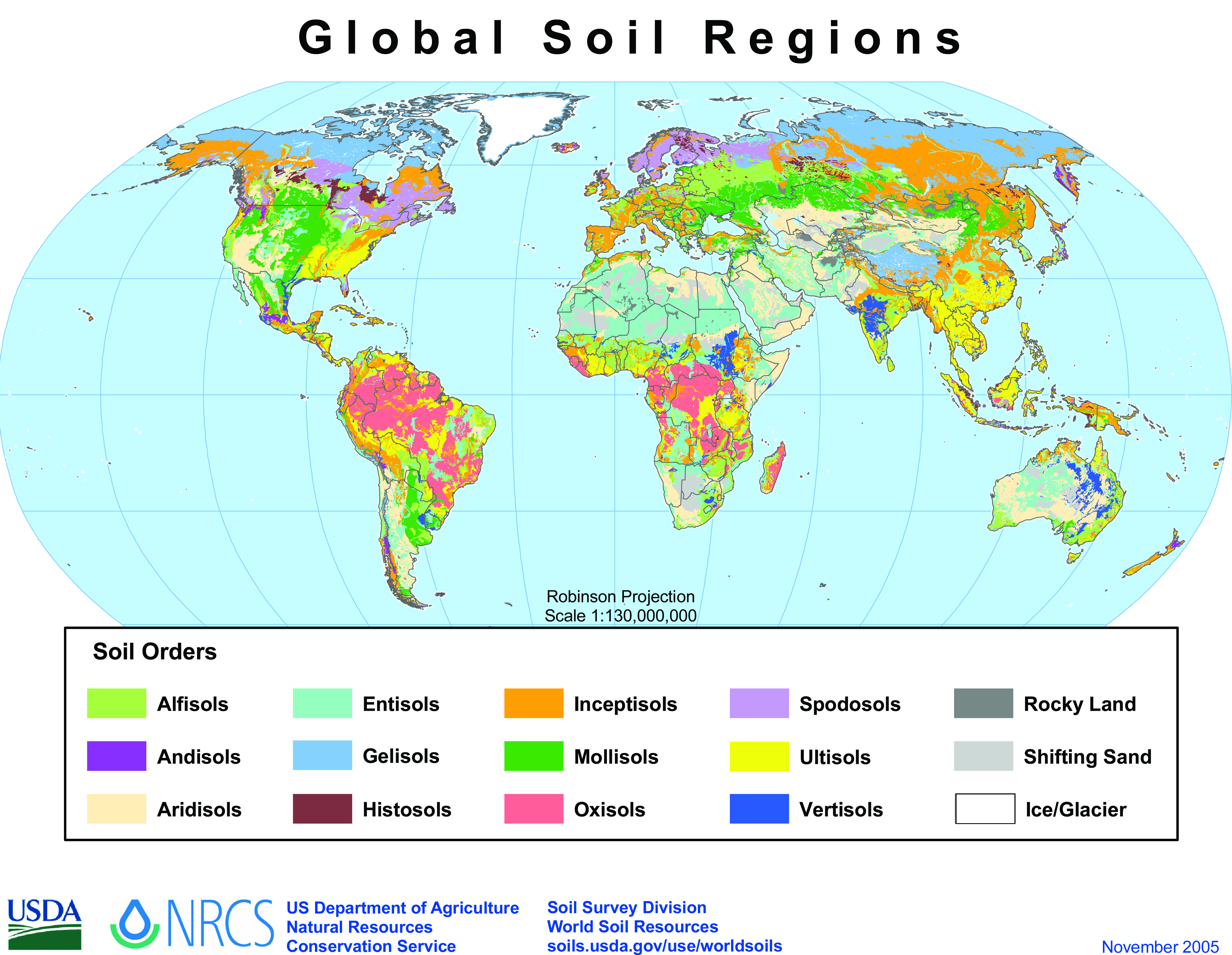
Basically it's a cool sim when it's trying to simulate stuff that actually happened, and before it gets opinionated.
Moreover, it apparently equates heat with dryness, and also doesn't take into account the effect of additional CO2 on plant life. It is called a greenhouse effect for a reason. It's quite possible the equatorial belt could heat up to where it's uninhabitable by humans but overrun by jungle rather than desert.