There is a growing number of cases where the salesperson will activate OnStar (or a non-GM equivalent) without asking or telling the buyer about it. As far as I know, there is no (legal) way to deactivate OnStar or similar GPS trackers built into cars. Of course if you're driving in a city the proliferation of ALPRs is so pervasive that your movements are being tracked in real-time even if you're driving a 1958 Ford F-series truck.
It's not illegal, it's just that it doesn't allow it in the UI. Who do you call to have that service disabled? No one knows. The best you can do is talk to someone and have the auto renewal turned off. That doesn't turn off the existing service until the renewal period hits though.
On my truck there is, but disabling the module also disables the whole infotainment. You could probably just go aftermarket but seems like a lot of work.
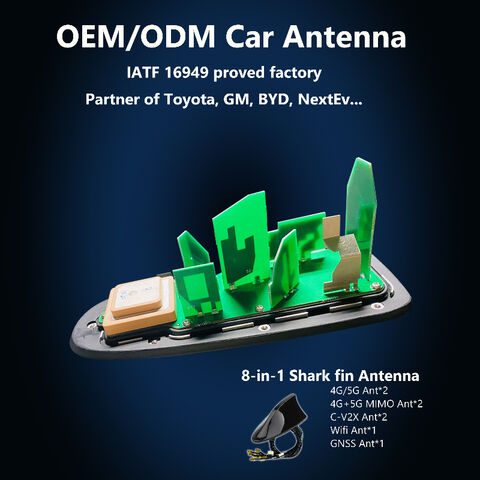
There still has to be an antenna somewhere in a location where it can avoid all the EM interference. It seems like disconnecting that would be sufficient.
Is the GPS two way or one way? I had the impression that the GPS signals went from satellite to earth, but the receivers did not send a signal to the GPS satellite.
I thought onstar connected the cellular network.
If I have the wrong information and somebody has more specifics about this, I would really like to know.
From reading the wikipedia page:
https://en.wikipedia.org/wiki/OnStar
Looks like the cellular network is used. Is the cellular antenna and the GPS antenna the same or are there two physical antenna? If so, then I assume one can just disconnect it.
Since according to the article it says 4g. Normally cellular providers discontinue old network, 2G and 3G network have been taken down in recent years. Does anybody know when 4g network will be removed/disabled?
I did find:
https://www.corvetteforum.com/forums/c8-general-discussion/4...https://www.silveradosierra.com/threads/disable-on-star.7196...
If the 4g network is taken down at some point, then whatever functionality that uses it will be disabled as well. So, one would think that perhaps that part of the system should be able to be replaced. If so, can't one just remove that part of the system? It is probably hard to remove, because if it is easy, then theft system is not as good.
One more thought, in California one can request a copy of one's data and also request that it be deleted. Has anybody in CA requested a copy of all the data that has been collected? How much data per month or day does it collected? Has anybody requested that their data be deleted? Would this make it difficult the manufacturer to train the driving assistance AI if enough people requested that their data be deleted?
But for most cars today, removing the antenna would require removing the dash and radio, possibly voiding the warranty or a lease agreement if you have one.
Interesting comment about AI training data... surely that would violate GDPR.
You own the hardware. But in the modern world we do not own the software that allows us to make use of the hardware. If deactivating OnStar requires a modification to the car's software, I can definitely see how it could effectively be illegal to deactivate. In the world of modern tech, the concept of ownership is practically dead.
But I don't know if a modification to the software is actually necessary or if that's what OP was getting at. Just speculating.
No need to mess with the software to deactivate these things. Just yank a fuse, disconnect the antenna, or -- worst case -- physically break the support circuitry.
the issue is that eventually they'll just make the car not start without it. it's like your inkjet printer refusing to print black and white because it's run out of yellow.
Eventually isn't now, though. We'll have to cross that bridge when it happens.
Personally, the inclusion of surveillance as a standard feature in cars means that I won't buy cars made so recently. It's easier to do that than to worry about disabling stuff. If that becomes impossible for some reason, I suppose that my driving days are over.
Gotta be pretty low odds that an OnStar module breaks while someone is in a remote location, leaving them stranded - then they make it back, diagnose the issue, take the manufacturer to court, the court finds the manufacturer guilty, and the punishment is substantial enough to outweigh the benefit of requiring the module in the first place.
Even if you could hold the manufacturers liable, I'm guessing most of them would still take that risk.
for just $100 per month, you can have a dedicated server connection over starlink to fetch an authorisation token start your car anywhere supported. terms and conditions apply.
Sure. As long as the software continues to work despite whatever you broke or disabled. It all depends on how forgiving the software is and how integrated the hardware is.
If manufacturers really want to collect this data, they currently have the power to stop you.
It looks like OnStar and other systems are on a dedicated fuse. Pulling that fuse would disable remote access to data. This would not disable onboard logging. Real location privacy on a journey would also require stashing your phone and toll box in a shielded bag and avoiding license plate readers.
The interstate also has “traffic counters” which pick up unique bluetooth IDs that are broadcast from each car’s center console infotainment system.
There’s a shocking number of ways to track a person in their vehicle before we even get down to the license plate. If most people here on HN don’t know about them, the general public is obviously completely unaware.
It's been since 3G that I delved into baseband specs in any depth, but I would not trust a powered up phone not to be commanded to connect to a network.
Couldn’t this easily be proven by monitoring transmission power from the device? There are all sorts of people who go on vacation and use the switch to avoid roaming charges. It would be plainly obvious to those people that their supposedly offline phone went online when they look at their bill. Or is there some secret apn bypass?
I ask this all the time but have yet to find anyone that has actually measured it. According to Snowden, basebands are still powered and operational even when the main application OS (android/ios/etc.) are shut down. And a non-removable battery sure doesn't help that. Plus, he also says that the baseband often has its own separate connections to the GPS, microphone and camera and can operate them without the application OS involved.
If the baseband is still powered, I can only assume it is simply sending (or responding to) periodic commands that do not require network authorization, which could possibly still let the network know where you are even without involving any roaming charges.
Depending on how careful you are and what equipment you've got on hand, you might be able to detect that going on, but I think "easily" is a stretch.
If there is a secret involved in this it would be undocumented commands sent by the network to phones that then interpret them as commands to connect to the network, plus baseband processors the periodically look for such commands. They don't radiate, so very little power is used, but they should be entirely dormant.
Modern cars have their own internal GPS and cellular links. Even if they don't have mapping, it's probably still there, always on for tracking and compass bearing.
GPS is even used for automatic HVAC controls in some vehicles.
A light sensor is used determine the amount of sunlight streaming and heating the interior.
GPS data is used to help calculate the angle of the sun, and determine which areas are likely to be heated the most, and thus needs more cooling.
A compass can be used to make it work even when the car is stationary (when GPS heading is unavailable).
A singular interior temperature sensor can be used for feedback, injecting some truth to balance things out.
It may seem far fetched or even fanciful -- functionality that only exists on very expensive or exclusive brands, or very new vehicles.
But as long as the GPS receiver and nav system exist on a network, and multi-zone HVAC is a thing in a given chassis, then the rest is mostly just software that is free (for the manufacturer) to copy and use.
Thus, Honda has been doing this stuff for at least twenty years now on fairly pedestrian vehicles.
The Honda factory service manual for my 2007 Odyssey touches on these operations, including diagnosing issues. It does not have an ISBN number that I can find.
These systems (multi-zone HVAC, navigation) seem to have been introduced in MY 2004, remaining mostly unchanged until MY 2008 when (at least) the navigation was facelifted and the rear HVAC zone became more autonomous.
Anyway, within volume 2 of that manual is this passage:
i-Dual Zone and i-Tri Zone Climate Control system (With navigation system)
The "i-Dual zone" climate control system automatically controls the temperature and the vent mode of the air direction
to the driver's and passenger's side, depending on the angle of the sun, and the direction of the vehicle. It calculates
information such as date, time, longitude, and latitude from the navigation system, as well as the radiant strength of the
sun from the sunlight sensor, to determine the appropriate mode position and temperature to be directed to each side.
The "i-Tri zone" climate control system is an addition of the automatic controls with the temperature and the vent mode
of the air direction to the rear section to the "i-Dual zone" climate control system.
...and if I'd read something like that in 2004 (or in 2007), I simply wouldn't have believed it. Even now in 2024 it seems either a bit far-fetched or blatantly obvious, with very little middle-ground -- especially for a vehicle that can't even turn its own headlights on and off or adjust dash lighting intensity based on apparent daylight conditions (as Chevy and BMW were variously doing over a decade prior).
(Other parts of the Honda manual describe the in-car temperature sensor.)
On late model Toyotas, pulling the fuse for the DCM (Data Communication Module - component that sends nonconsensual telemetry back to Toyota) also disables the car's bluetooth microphone and front right speaker.
There is a procedure to disable the DCM and restore at least the speaker, but it involves partial disassembly of the dashboard.
There is a procedure at the link below for doing just that. You disconnect leads for the cellular main, cellular sub, and GPS antennas from the DCM, and replace them with 50 ohm terminators. This avoids error codes and check engine light, and instead leaves the transponder in a perpetual "out of range" state.
Why am I special? Any mod anyone would want to make to a car has a YouTube video associated with it. And for real, to borrow your number, that is true 99.99999% of the time.