In our apartment, we have the following smart features:
* Multiway light switches [0], which allow switching lights on and off from several different locations.
* A boiler, which heats water up automatically should it become too cold.
This covers lighting, heating, and supplies water at arbitrary temperatures between around 15 and 60 degrees celsius on demand, at several locations. The features do not require internet connectivity, are vendor-independent and have zero privacy issues. In the last 30 years since their installation, they have not once failed.
I am at a complete loss why this should not be smart enough. The technical overhead some people introduce into their lives just to avoid pressing a button to turn of the light is mindblowing to me.
> I am at a complete loss why this should not be smart enough. The technical overhead some people introduce into their lives just to avoid pressing a button to turn of the light is mindblowing to me.
My leg is currently broken and I'm on crutches. At this point I'm really glad that I installed voice-controlled lighting in my house. Good reminder that things that seem trivial are very much not to people with disabilities.
Impairments to mobility are a good topic for this discussion. The question is though, are the smart tech sufficiently better than a simple remote? --Best wishes in the healing process.
Not to say a dedicated remote isn't useful, but phones are really convenient.
You generally have your phone with you, so you don't need to keep track of a separate device or devices. Unlike a TV remote, which is used near your TV, a house remote needs to be used anywhere. Everyone in your household can have their own remote (phone), so there's no passing the device around.
The types of controls are varied, and a color touch screen is generally the best option. Light switches, dimmer lights, colored lights, fan controls, AC controls, etc. While I can imagine creating a remote that handles all these different devices, it's going to be a challenge to create hardware that services all these different devices intuitively.
> With kids, it has turned out to be an energy saver.
I wonder, though. Most folks now have LED bulbs, so being diligent about turning off lights isn't as much of a savings as when I grew up and everything was incandescent. Also, if you train kids that the lights go on and off on their own, are they more likely to just never turn anything off?
My teenage kids have friends over frequently, and while my kids have been reasonably well-trained to shut things off, close doors after they go through, etc., their friends are generally pretty bad stewards of my electricity. (And it's not malice; they just don't think about it.)
I like the idea of automating efficiency into the system, but there's always a human element. And that seems to require repetition.
> I wonder, though. Most folks now have LED bulbs, so being diligent about turning off lights isn't as much of a savings as when I grew up and everything was incandescent.
It's very convenient to have the light come on automatically in stairwells and lavatories. But you are right about it taking much longer to pay back. My calculation is that compared to having the LED bulb on continuously it pays back in about two years.
I have several infra red motion detector bulbs in stair wells and in the pantry as well as 'radar' bulbs in several other places (these detect movement by the disturbance in a low level high frequency radio signal).
> (these detect movement by the disturbance in a low level high frequency radio signal).
I'd never heard of this before. One of my former managers is really into Home Assistant and has done a lot with his setup, but I think all of his motion detection was IR. How's your 'radar' setup? Do you get a lot of false positives/negatives? How's the distance on its detection?
It is described as a radar sensor because it uses a high frequency oscillator and monitors the change in the signal due to things moving in the electromagnetic field. Imagine the effect of waving your hand near the aerial of a radio receiver when the signal is weak.
A 4 watt LED lightbulb left on constantly for a year would consume 52 kWh of energy, costing ~£7.50 at UK prices, releasing ~9.5 kg of CO2, the equivalent of driving 23.5 miles in the average US passenger vehicle.
There are good reasons for turning off lights in the house (getting a good night's sleep is one!) but saving energy is no longer one of them.
There are a lot of light bulbs, though. The LED switch has had meaningful impact on US residential energy usage [0]. IEA reports 38B in LED sales in 2015-2020 [1]. Averaging $10 (high) per bulb, that's 3.8 billion bulbs (including non-residential).
Leaving a light on doesn't matter much. Leaving billions on can clearly have an impact.
The billions of bulbs have the same proportional impact on the national energy budget as the few in your home have on yours, that is practically nothing.
Our new house came with a Nest thermostat. It has some perks. Probably the main one is that we can turn the thermostat down to just warm enough to keep the pipes from freezing when we will be away from the home for a while, and then remotely turn it back up so that the house reaches a comfortable temperature just as we're arriving back home.
However, I don't think that that's enough to counteract the many, many UX annoyances we've encountered with it. When it craps out or Google decides to brick it, I intend to replace it with a regular old programmable thermostat.
I admit to being mystified by the value proposition of Nest thermostats. I have a simple programmable thermostat that I can put on a set schedule (and change if I'm going out of town and want to set everything for energy savings) and the incremental value of having something more dynamic just seems miniscule.
If you only have one thermostat getting a "smart" one doesn't really add much unless you live alone and want to take advantage of the presence features (it knows when you're home) in order to save some money.
However, if you have more than one thermostat (e.g. separate downstairs and upstairs air conditioning/heating) having a "smart" thermostat is awesome! I can change the temperature on both from my phone without having to go upstairs.
We also installed the additional sensors in various rooms in the house so I can control which zone gets used in determining the whole-house temperature (there's often several degrees variation between rooms in my house on hot summer days). The thermostats in my home were installed in terrible locations that don't reflect the temperature in places where people actually are so the remote sensors are fantastic.
I installed a Nest so I could add a remote temperature sensor in my bedroom. I configured the nest to heat based on the bedroom temperature at night and the living room (where the thermostat was) during the day.
Before the Nest, the bedroom would get way too hot at night because it was better insulated than the living room, making it difficult to sleep. Afterwards this was no longer a problem. Saved a bunch of energy too.
Other "smart" tech: remote controlled outlets, later swapped for hue bulbs, let me flip all four of my living room lamps on from the entry way OR the hallway. Before, there was no switch at the entry way leaving me fumbling through the dark for the wall switch at the other side of the room to turn the ceiling light on. Then I'd have to turn the floor/table lamps on/off individually.
I'm sympathetic to your overall point, but I'm impressed that you've had zero boiler failures in 30 years. I'm pretty sure that's better than the average. (Mine is about 10 years old and has needed one fairly minor part replacement to fix a failure in that time. The figure that seems to be commonly quoted for boiler expected lifespan in the UK is 15 years.)
I don't have too much "smart home", but I am really tempted by lighting. Being able to dim and change the color temperature of the light depending on the time of day is compelling. Dimming is easy conceptually, but it would mean rewiring large portions of my home. I don't know how I'd manage that with color temperature.
I like 2700K. Wife likes 5000K. Having bulbs that can go back and forth has saved me thousands of dollars by preventing a divorce.
Seriously, though: Controlling multiple bulbs at once is very convenient. Sometimes I sleep downstairs, sometimes upstairs. The lights I want on/off differ in both cases. So a simple routine "Sleep downstairs" and "sleep upstairs" that controls which lights should be on/off is more convenient than getting up and doing them individually. It was mere fun when I programmed it, but once I had it, it was awesome.
Also, having some lights come on at sunset was a real improvement. Gone are the days when I come home during winter to a totally dark house. Granted - you don't need Internet to achieve this.
AC compressors should not operate below 60F outside. Sometimes it's still warm when I sleep but will dip below 60 near dawn. Because of this I can't turn on my window AC all night. I have a smart switch that can handle the wattage of my AC. My next project: Turn it on when I go to sleep, and have it turn off when the outside temperature is below 60F - and turn it back on when it goes above 60F a few hours later.
Philips makes a range of "Warm Glow" LED dumb bulbs that change from ~2700k to 2200k as they dim.
Not nearly the color range (or control ability) you can achieve with something like Hue bulbs, but I've been happy with them for bed side lamps and the like.
You can also put Hue bulbs in and use something like HomeAssistant with the F.lux plugin to control the brightness + color temperature automatically throughout the day. No wall switch-based dimming, but dimmable with a phone.
I'm a big fan of the Hue lights. I've done the IKEA ones, and they are great, but the phone-connected options offer scheduling and automation, if you're into that kind of thing.
I have some led strips installed with a simple remote that allows temp and dim control...I love it and don't think auto changing these with the day would be that big of an improvement than pushing the button a few times until its at where I like it.
For some reason, last year I tried to rederive the circuit diagram for 3 way switches. I failed. It's actually a very clever idea, and higher numbers are fun to think about independently.
The switch way numbering is based on the number of terminals.
A 2-way switch has two terminals and gives a closed (on) or open circuit.
A 3-way switch has three terminals and gives you one terminal tied to either, but not both of the other two.
A 4-way switch has four termimals and gives you two terminals which are each tied to the other two terminals and you can pick; these also give you a big headache when one switch of many fails and one circuit path is open, but many paths still work.
Or in other words if you're used to seeing switches from the electronics side of the world:
2 way: SPST
3 way: SPDT
4 way: DPDT
I once lived in a house with a 5(!) gang box with three of the switches wired to the upstairs hall light incorrectly and another switch upstairs. It was as big a mess as you'd imagine.
There are electronic three-way switches that have either a single button or an up/down rocker that always reacts the same way (up for on, down for off).
These are available in "smart"/connected form or regular electronics-only form. Example here:
There's two way, three way, and four way, and four way can support arbitrary numbers of "ways" - because a path is always found on one flip of the switch and not on the other.
No, GP is responding to the 'multiway switching' link in the top-level comment.
This is about where, in the UK and I'm sure most developed jurisdictions, stairs for example must have a both on and off control at both ends - regardless of the state of the other switch.
If they were simply in parallel as you describe, you could find yourself in the situation of going upstairs to turn it 'off up there', (because it'd need to be 'off everywhere' to be off) then realising it was already 'off downstairs' and falling back down.
If they were simply in series, you could find yourself unable to turn the light on without first going downstairs at speed in the dark, because it's 'off there' no matter what you do upstairs.
The key thing is that it's a double-pole, double-throw switch. You can put any number of them in series, and the circuit essentially counts the parity of the switches, so flipping any of them toggles the state of the lights.
That's what a 3-way or 4-way (should be called X-way) switch setup is - three or four or more switches that no matter what the state of the light is, flipping ANY switch will change the state.
> a path is always found on one flip of the switch
I thought you were taking the comment you replied to to be seeking a simple parallel arrangement of SPST switches, so that turning any one on would turn the light on.
So I was explaining that No, point is you want 'off' on any switch (regardless of the state of the others) too. Seems you understood that though. :)
yes... A way to look at 2 way switches is to look at the connections of usual circuit setups to Boolean logic. Taking two on-off switches,
- parallel is or
- series is and
We can see that a 2 way switch is xor (or xnor depending on the setup).
So now, for 3 way it feels like you have to beyond 2 state (on-off) switches... i don't have a proof of impossibility that 2 state switches cannot do 3 way switching, but in practice they indeed involve more states (multi-throw etc.)
The closest you can get with '2 state' (by which you mean SPST - single pole single throw; SPDT is the standard way to achieve this but is usually still '2 state', it's just that 'off' (if you like) has a terminal too) switches is to add a 'don't care' state, and accept that first deliberate ('do care') switch wins.
To do this you have a live rail and a switched live rail, and two SPST each end: one switch SL hot or not; the other to break its connection to the light. Open the latter for 'off', close both for 'on', close break & open SL for 'don't care'. (Then in the 'don't care' state, SL is hot iff switched on the other end, and if so is also closed through to the light.)
Not legal, not (that I can imagine) desirable!
Proving it is actually simple if you continue your Boolean line of thought: you can't build XOR without an inverter; an SPST switch is only a sort of 'half inverter', a mux between '0' and its input. Since it can never give you '1' from '0' input, you need a schematic for your XOR where each constituent truth table in isolation has '0' out for its '0;0' in line. Which can't be done, because clearly then you could never get '0;0=>1' overall.
These circuits don't run on digital logic, but are instead based on physically connecting and disconnecting an electrical connection between the live and neutral wires. This means you have to work out how to use the two switches to produce a connected circuit when only one but not both switch is in the up position.
Digital logic works on lower voltage than mains voltage, and you'd need to maintain far more wires to hook up the connection (since the actual gates themselves need both power supply and ground drain wires which are separate for the inputs). Possibly also a relay to actually drive the higher voltage/amperage for the light bulb.
I've really liked my RainMachine sprinkler controller. It only requires internet connectivity to download weather reports; all other functions are available via LAN. Being able to turn the sprinklers on via the phone is incredibly useful for verifying repairs, finding leaks/clogs and aiming spray patterns. And it reduces water usage by deferring watering if enough rainfall has occurred.
Why do you need internet connectivity for any of that?
My sprinkler system has a sponge hooked up to the roof. If the sensor detects the sponge has too much moisture it doesn't turn the sprinklers on, because that means the soil is still saturated from recent rain.
A forecast driven watering algorithm can look for rain in the immediate future, rather than the current state of the ground. It can also change the duration of watering based on temperature and relative humidity. RainMachine does that while only consuming weather data. You also have the option of turning that off and just using wireless control of the sprinklers, which as the GP says is extremely handy.
How long is watering suppressed by the sponge? Does the controller "remember" that the sponge triggered a few days ago when the watering day comes around?
It has a permanent sensor on there, so the sensor doesn't remove the signal to not turn the automatic sprinklers on until you press the manual bypass button, or until the sensor no longer detects moisture above the set threshold.
When the controller hits the scheduled time it checks with the sensor unit, if the sensor says there's too much moisture it doesn't turn them on.
I wonder if that actually works that well. Especially with black roofing tiles which get quite hot. Compared to the hopefully shaded by the plants themselves soil. If your plants are sometimes shaded by trees depending on time of day the sponge will also probably fail you because your roof is more likely not to be shaded at all in many places for fear of overhanging tree limbs or roots being a danger to the house over the long term. Though it would be good for saving on cooling costs/energy use but then the sponge stays too wet vs. the soil.
I'd go for a soil moisture probe. That checks whether the plants really need the water, not whether a sponge with a "different reality" than the plants is dry.
Weather report data is cool though. Though you can't trust the weather report only, you can nicely combine the data from a soil probe (a "multi zone" system with a probe per zone would be great, probably easy to program with a Pi) with expected rain but an override via the soil probe if it actually didn't rain.
Since the OP said sprinkler I'm sort of thinking lawn though which I think should just never be watered at all ever. Waste of water just to look nice. And yes our town actually prohibits watering of lawns in summer. And for plants drip irrigation is better than sprinklers but hey, if you have a sprinkler system already go for it.
Caveat: I don't live in a fire hazard zone so take this with a grain of salt.
Wouldn't it be better not to plant any grass if it's that bad where you are? For soil erosion planting something else sounds more adequate.
I do see a problem with septic fields. Can't plant anything else that I know of on those but grass. If you do know of something let me know and I'll plant it on mine instantly lol.
Why would you not plant a garden? I could maybe see not wanting to plant root vegetables, but peas, strawberries, cabbage, etc surely present no issues whatsoever. (And TBH, root vegetables should be just as fine if the septic tank is doing it’s job.)
    It's not entirely clear (some people/studies say it's fine, others say it's not) whether certain pathogens can end up in your vegetables this way and/or which vegetables would be fine and which wouldn't. I mean, some people do compost their own #2 and put it on their veggies and while it's been OK so far for many, I personally stay on the safer side of these things until desperate times call for such measures.

    Anything that has a root system that is able to reach the septic field's drain lines is potentially able to clog the holes. E.g. I tried raspberries in a planter on top of it for a while but even though I tried, I couldn't contain the roots and/or raspberries fall down and the seedlings grow in the grass. I ended up removing the whole thing just in case as septic drain field repairs are either expensive or a lot of work.

    Evaporation apparently plays some part in the effectiveness of the drain field (it doesn't just all drain out into the ground). Though I wonder, why plants taking up the water and evaporating it via their leaves wouldn't do the same thing, potentially even better through a larger surface area, so I guess it's mainly the first two points.
Well, anecdotally, I ate from a septic-fed garden for more than a decade, to no ill effect, from potatoes and carrots, to peas and broccoli. I wouldn’t hesitate to do it again. (But, yes, one does need to consider roots clogging the pipes; annuals perhaps safer than perennials, which surely drive roots deeper.j
Clover is a popular alternative. Some homes are xeriscaped (no lawn). But converting an existing lawn is expensive, even with subsidies. Selecting native grasses and watering less is an affordable compromise.
> I wonder if that actually works that well. Especially with black roofing tiles which get quite hot.
FWIW the sponge isn't literally on the roof. It's on a handle that's connected to the edge of the roof and holds it probably 4 or so inches horizontally away from the roof.
Sprinkler systems have for years included a rain gauge that trips a signal if there is water in the tube and turns off the lawn watering. The smartphone controls would be convenient but only for very specific situations and not 99% of the time you're using the sprinkler system.
I was too cheap to buy a flash system and made one with a tp-link smart plug and a solenoid. It can be activated by the mostly-ok tp-link app, but is also automated in Home Assistant. It turns on for 10 minutes in summer.
By wiring the solenoid correctly, it fails to an off state. It’s basic as all hell and works really well.
Well first of all I think there's a large portion of home automation users that are tech people and just enjoy the process more than the results.
There are some generally good use cases though.
My most useful automation feature currently is that I can turn the air conditioner on and off in my attic office without having to walk up two flights of stairs or even be home. Sure I could leave the ac on a preset temp, but that would be a huge power waste.
Then there's home security features, which are really all just a subset of home automation. The only low tech solution to this problem is basically to move, but that isn't exactly practical.
> The technical overhead some people introduce into their lives just to avoid pressing a button to turn of the light is mindblowing to me.
I use a "smart" socket to switch off most electronic devices in my home for the night (and I tend to hide cables so it's not easy to do manually). And because it's automatic I don't have to remember switching it off and then on in the morning.
Yeah, when I think about smart homes, I think about the possibilities of materials and structure and moisture management and clean-air management and noise abatement, not gimmicks. American houses are surprisingly poorly designed and built given what humanity knows about the discipline.
The motivation is probably due to Star Trek. Who wouldn't want swishy Star Trek doors? Ironically they were opened by hand from behind the scenes, at least in the first shows.
Also, 'Computer, locate my husband.' 'Your husband is in the attic'. etc.
I think the most miraculous invention of the Star Trek universe is a code of ethics that people actually followed. They didn't have the endless power hungry narcissists that are endemic to every human society. It's the least probable aspect of the series even including warp drives and teleporters. Maybe they all died in World War 3?
Yes, although I think the absence of those power hungry narcissists (who no doubt lurk back at Star Fleet HQ) would be more down to having a relatively isolated and small group of people living and working in close proximity. Dark triad individuals can be identified early and worked around or placed where they cannot harm. An explicit code of ethics would be an Achilles heel because any such a code can be hacked or subverted.


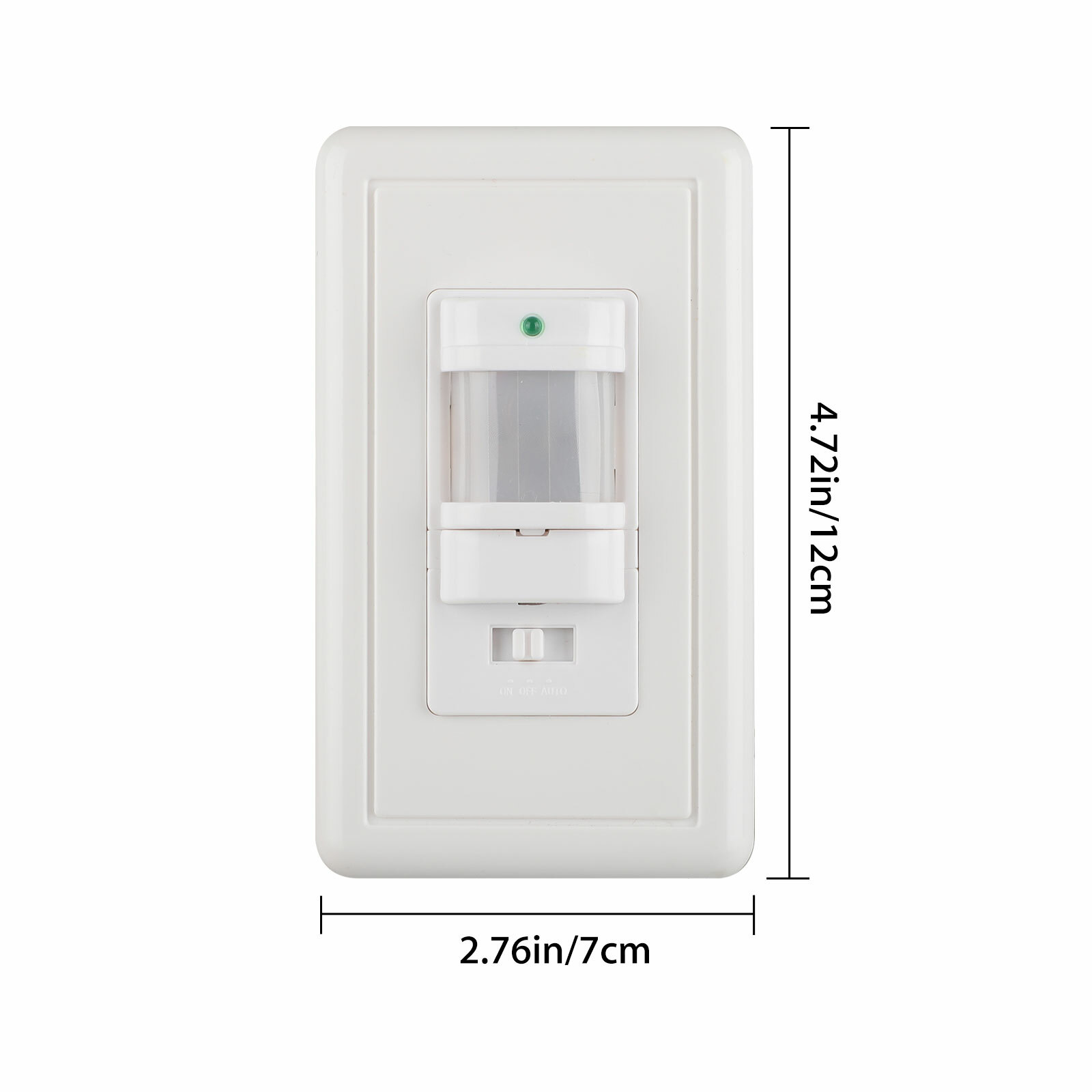
* Multiway light switches [0], which allow switching lights on and off from several different locations.
* A boiler, which heats water up automatically should it become too cold.
This covers lighting, heating, and supplies water at arbitrary temperatures between around 15 and 60 degrees celsius on demand, at several locations. The features do not require internet connectivity, are vendor-independent and have zero privacy issues. In the last 30 years since their installation, they have not once failed.
I am at a complete loss why this should not be smart enough. The technical overhead some people introduce into their lives just to avoid pressing a button to turn of the light is mindblowing to me.
[0] https://en.wikipedia.org/wiki/Multiway_switching