At one point their T&S explicitly said that tether had no obligation to buy back tether at any price at any time. They then changed it to be more opaque.
If there's any financial idea the crypto people just do not get, it's the idea of "backing". A currency is not backed by dollars unless I can convert that currency freely back into dollars. It does not constitute "backing" to have the money nominally somewhere in existence, but not actually available.
Heck, who'd like a few hundred thousand jerfcoins? Come and get 'em! They're backed by dollars, in the sense that I guarantee there exists in the world many hundreds of thousands of dollars. jerfcoins don't give you any claim to those dollars, of course, but they're backed by them just the same!
("But jerf, what are US dollars backed by?" Purchasing from the US government the right to not be arrested and thrown in jail for lack of payment on taxes. Just 11 days ago, many people completed trading in their dollars for the year for that backing, so it's definitely a transaction that can done by real people. It may not be an aesthetically pleasing form of backing, but it seems to be working.)
I agree with you almost 100%, just wanted to add that no current Government/State can back the nominal monetary mass flowing through its economy with real money, no matter the amount of taxes they're collecting. The reason being that the nominal monetary mass it's pretty big (to use an euphemism) compared to the real money flowing through the real economy.
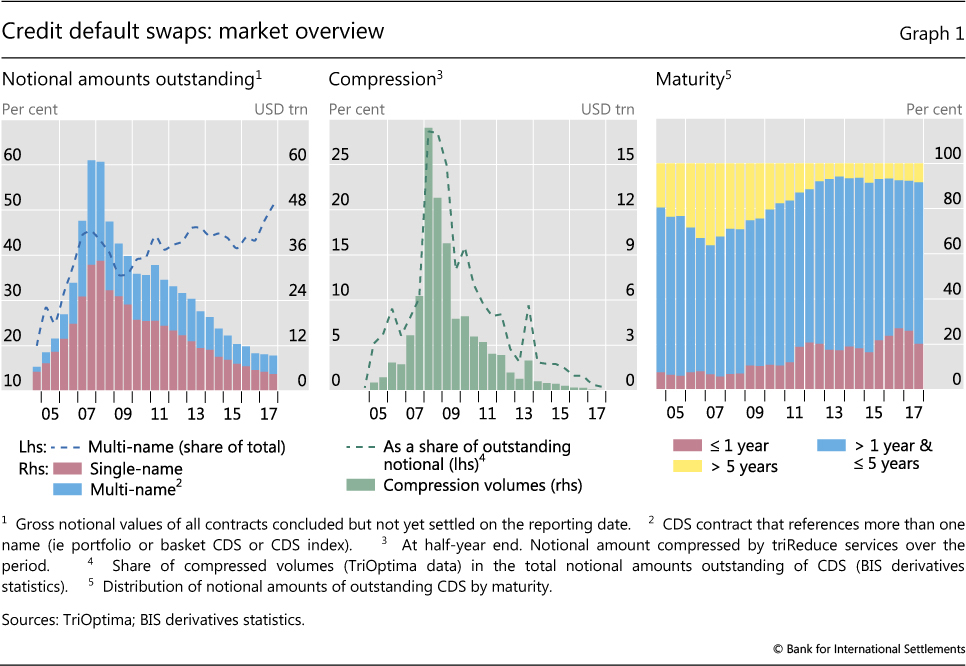
For example in 2008 the CDS market alone was at some point "valued" at close to $36 trillion [1], while for comparison the US GDP back then I'd say was around $14-15 trillion (give or take a few trillion). Yeas, I know the CDS market back then was a financial abomination, and I do know that a lot of those $36 trillion were probably money counted twice or thrice or even more, but the idea remains. And that's just one market.
What indeed still keeps this whole house of cards still standing, what keeps any financial system standing, is trust. And, as you very well put it, once you have the power to put people in jail (or launch inter-continental ballistic missiles) you kind of have a lot of trust by default. But there are moments when no matter how powerful you are you still manage to lose that trust, see the USSR post 1989 or the Spanish Empire during and after the rule of Philip II [2], that's when things turn nasty:
> Charles V had left his son Philip with a debt of about 36 million ducats and an annual deficit of 1 million ducats. This debt caused Phillip II to default on loans in 1557, 1560, 1575, and 1596 (including debt to Poland, known as Neapolitan sums). Lenders had no power over the King and could not force him to repay his loans. These defaults were just the beginning of Spain's economic troubles as its kings would default six more times in the next 65 years.[9] Aside from reducing state revenues for overseas expeditions, the domestic policies of Philip II further burdened the Spanish kingdoms and would, in the following century, contribute to its decline, as maintained by some historians.[10]
One of the explicit major purposes of fiat currency is to make currency a hot potato so that if you try to hoard it you lose wealth. This is almost precisely counter to what the people who desire money want; so why would they accept fiat if they weren't forced to?
You'd also get pressure from workers who don't want to be paid in tokens that lose 2.5% of their value each year. Who can say with a straight face that they will accept a default 2.5% pay cut each year built in to their wages, no questions asked? That would verge on crazy.
If fiat isn't backed by some sort of government compulsion it is difficult to justify why savers or workers would deal in it. It isn't stable enough - it's value declines too quickly. The people who benefit are borrowers, the big banks and to some degree employers - powerful players, but not enough to force fiat in a battle where government isn't involved. The uniform acceptance of fiat is strong evidence that compulsion is involved.
> You'd also get pressure from workers who don't want to be paid in tokens that lose 2.5% of their value each year. Who can say with a straight face that they will accept a default 2.5% pay cut each year built in to their wages, no questions asked? That would verge on crazy.
Getting no raises is a pay cut, yes. But most workers spend their wages in the same year, inflation is not a problem here.
Here is an analogy in real terms just to make sure we are on the same page:
Contract A:
I'll give you 1,000 warm meals in the first year, 980 warm meals in the second year and 960.4 in the third year, progressing according to meals = 1000 ^ (year - 1). There is an understanding that I'll maybe give you a raise every year or maybe not depending on market conditions.
Contract B:
I'll give you 1,000 warm meals a year. We'll renegotiate next year. If market conditions have changed I might offer you less.
Now, in principle these two contracts are not that different and market conditions should force the employer to pay market wages. But if you offered a worker the choice between the two options they'd pick B. The structure of contract A is clearly not in the workers interest because it involves a lot of bureaucratic foolishness just to get offered a steady real income. It can only encourage shenanigans.
If I were on Contract A (which, since I'm payed in fiat when I work, I am) then I have to semi-regularly run figures against a diverse array of facts to figure out if I'm making or losing against my starting salary and I have to fight my employer for a wage raise if inflation is 4% but they offer a 2% increase. In addition there is opaqueness about what inflation really is; the government agencies do their best to measure it but it isn't a perfectly distributed phenomenon. I don't think I can accurately estimate what wage increase would be maintaining a fair wage when I am working. I don't have enough information about, eg, inflation by postcode or asset class vs my consumption.
I don't accept that that compensation structure is good for me as an employee. And more broadly the incentives for workers is to be paid in something that looks almost exactly like currency but does not inflate away year on year.
Yes, the same nominal amount of dollars is worth less in the future, but the employer can also raise prices for the same amount without any loss in revenue. Talking about spherical cows here.
Since inflation affects everything at once, it can be ignored when calculating wages vs profits. It's all about the distribution of money, not some esoteric "value" derived from macroeconomic variables.
For wage-sensitive jobs, the minimum wage is usually raised every year (or couple of years), so that should correct for employees without leverage over their wages.
Inflation affects different economic actors differently, but at "regular" levels of about 2% a year, it's too low to matter for the majority of people.
Yeah, the employer is fine. This is about the people earning the wages.
> Talking about spherical cows here.
> Since inflation affects everything at once
Are we dealing in spherical cows here or not? That is a friction-less spherical cow if ever I've seen one.
The agreement on inflation is to use the best-guess, which is the government number, but the as-experienced effect of monetary creation would varies enormously depending on where and how people are engaging with the economy.
> at "regular" levels of about 2% a year, it's too low to matter
The ordinary people I've dealt with care a lot about small amounts of money because they don't have much to spare. 2% p.a. represents a significant risk to them. And, critically, if a wage earner had a choice they wouldn't choose to be subjected to it.
By too low to matter I mean the employee doesn't meaningfully change their situation.
If they need to work for a living anyway, earning 2% more doesn't make them retire earlier.
Inflation mostly affects people that can save significant amounts of money for longer periods of time, not wage earners.
The alternative to getting payed in fiat is some other value storage thing that is even harder to turn into rent and groceries. Unless it's actual groceries and corporate housing, or token for corporate shops, which is even more regressive.
> By too low to matter I mean the employee doesn't meaningfully change their situation. If they need to work for a living anyway, earning 2% more doesn't make them retire earlier.
If somebody doesn't have savings, then they are spending everything they earn. A 2% real change in wages would require them to reduce their real consumption by 2%.
> Inflation mostly affects people that can save significant amounts of money for longer periods of time, not wage earners.
It changes the situation from one where wage earners will maintain their lifestyle if nothing obviously changes to one where wage earners will be worse off if nothing changes.
There is a practical difference between these two. If there was a choice, by far a majority of people would rather not live under that second regime. Similar (in a very minor way) to standing around on railway tracks; in theory there is no problem because when you see a train they could move - but still a normal person would not choose to stand there at all. Use of fiat and the associated inflation creates risk of costs for wage earners.
A system wouldn't stably settle on that sort of outcome without government backing the token with some serious clout. The uniformity of fiat for labor is very suggestive that it isn't a social construct. Society isn't that uniform.
I agree that wage earners lose real purchasing power with inflation. However, agressive minimum wage adjustments and welfare (for lower incomes) and unions (for higher incomes) should provide all the incentives for employers to keep raising wages, I don't think banishing fiat money is necessary for that. There are other ways to achieve the same purpose.
I also agree that it was preferable to be payed in non-deflationary tokens, but I fail to see any real-world examples of that.
The ability to settle taxes and debts with money is a rather large part of why it's useful, especially relative to things which pretend to be equivalent but are not possible to settle tax bills or debts with...
"Money is purely a social construct. It only has value because people collectively find it useful. There is no backing."
You're missing a very important point: US dollars are special because they are the only thing accepted to pay US taxes.
No matter how valuable of a thing you own - gold, euros, a truck full of mona lisas, shares in TSLA ... it will not be accepted as payment for US taxes.
Understanding where the value of money comes from and what it is actually used for and what the nexus is between financial entities and physical force ... it all starts with understanding what it means that the government will not accept anything from you, no matter how valuable, for payment of taxes other than the currency it issues.
The government starts accepting any asset for tax payments. You can now sign over fractional ownership in your factory, or your rental real estate, or your Mona Lisa to pay your tax bill.
Are dollars now worthless, because they're not required to pay taxes? Do you abandon your bank accounts because the dollars have no value?
Certainly not! It's too inefficient for the grocery store to appraise your Mona Lisa and negotiate a 1e-8 share of it. Dollars are still useful, and they still have value even if they don't have a monopoly on tax payments.
Let's try something that isn't a thought experiment, but a natural experiment, that is, something that has happened dozens of times throughout history. Why is it that when governments collapse, their fiat currency simultaneously goes with them? If money is just a social agreement, why do those two things always happen together? If money is just a matter of convenience, why isn't that money still useful even after the government collapses, if nothing about the state of that money has changed? Why aren't people still accepting Confederate State Dollars somewhere?
The answer is that the state has changed. The backing of the currency collapsed, and it turns out that currencies collapse hours, if not minutes, after that news gets out. In the modern era, probably minutes.
There's an irony to cryptocurrency advocates claiming money doesn't have backing, which is that the only reason you can claim that is precisely that you're so casually used to fiat currency being rock solid, to the point that you literally can't imagine it collapsing, that it leads you to misunderstand the nature of currency.
The point with taxes is they are denominated in dollars or similar so if you conduct your US business in French Franks or Bitcoins or whatever, converting each transaction to dollars on the return would be a pain in the arse which is why most businesses don't do that. Paying isn't a problem - send Franks or whatever to your accountant and they'll sort it.
I think the point being made is that the exchange rates of any currency -- whether from currency A to currency B, or currency B to "hot dog, fries and soda" -- are essentially set by shared belief, not by some kind of intrinsic value, no matter what the currency is ostensibly backed by. The idea that currency needs to be backed by anything in the sense it's being used here (e.g., a tether backed by a dollar, or a dollar backed by a fixed amount of metal) is a convenient fiction that requires trusting all the entities explicitly or implicitly involved in the transaction. I'm aware bitcoin and other blockchain-based "currency" tries to expunge the need for trust, but in practice it seems like most of them succeed more in expunging accountability.
The argument that state-issued currencies have value because they're the only currency you can use to pay taxes back to the state is true in some sense, but the value is still essentially arbitrary and the trust is still required. (e.g., if I owe money come April 15th, I have to trust my bank, Visa, and TurboTax, probably, even before it gets to the IRS).
The one exception would be the Canadian Tire dollar, it existed for 40 years with only the backing of a major retailer. I've read a few academic economics papers on the Canadian Tire dollar because it's an exception.
Although Wikipedia has "but is not considered a private currency" for that. But you are backing up the point that there isn't much that's existed a while that isn't backed by something. The other thing I thought of as a well known non backed currency was literally monopoly money. Though that "can also be used as a derisive term to refer to money not really worth anything"
It'll be interesting to see how the cryptos work out. I'm optimistic that bitcoin will still be valuable in decades to come due to scarcity and fame. Bit like Van Goghs and that kind of stuff.
> For example in 2008 the CDS market alone was at some point "valued" at close to $36 trillion [1], while for comparison the US GDP back then I'd say was around $14-15 trillion
People say this all the time, but regardless of whether or not the CDS market was or wasn't a shitshow at the time, comparing the outstanding notional to GDP is meaningless.
At the time, the CDS market worked like most derivatives markets: you face a small set of players and you are constantly offsetting existing transactions and subjecting them to netting rules on a master isda.
So like, let's say Foocorp has 100m bonds out there. I want to buy protection on 1m of this (basically, I want to buy default insurance). You agree to sell this to me. Ok, there's 1m in CDS contracts' notional value outstanding.
Now, our views, other risks, whatever changes. Maybe I sell the bonds, and holding this CDS is too risky for me now because it's just a naked short of bonds I'm not long. Maybe you buy a bunch of these bonds, and now you're not only facing the default risk of the bonds but paying the default insurance to me.
So you decide to buy another CDS offsetting your existing one. I'm also trying to flatten out here so I sell a CDS offsetting my existing one. Now (mutatis mutandis) we're both at 0 CDS risk. We each have entered into 2 swaps, they're directly cancelling.
But the total notional? Now it's 2m. Contracts expire, so the number doesn't strictly go up, but given how the products are bought and sold, it mostly does. It would be like looking at the stock market not in terms of the market cap of all the companies, but as the dollar value of all the trades made in a certain time period. It's not that this number is meaningless, it's just that it does nothing to explain how much is "at risk".
Of course in reality this is all much more complicated, but the basic principle holds.
The US Government will not arrest and throw you in jail for lack of payment on taxes, as long as you have accurately declared all of your income. Failure to pay is a civil violation, not a criminal offense. However they will garnish your wages and forcibly seize your assets to settle large tax debts.
It's true that the first failure to pay is just civil, absolutely. In fact the government and I are currently involved in a mostly-friendly dispute about my 2016 taxes, and I'm not currently worried about the men-with-guns. However, if you defy them on payment, and then defy them by hiding your income from them, and defy them on the next thing they do, and defy them by failing to pay your civil violation penalties, etc., they will eventually come after you violently.
The wage garnishment and forcible (note the word) asset siezures are themselves backed by men with guns. If they tried to just go around and sieze assets politely, while never threatening a fly, it wouldn't take long before people figured out there's no particular reason to let them have it.
One advantage of this is Ponzi schemes never have to fall apart. As long as people are willing to HODL forever your crows never have to come in to roost.