What an evolution for the tech industry. From being the underdogs trying to change the world for the better, to becoming top dogs with all the same egoism and "money and power above all" that Big Oil and similar industries have been known for for decades.
From that perspective, Trump loves money, loves deregulation, and will open the door for whatever dystopian play if it provides enough benefits to him, so it only makes sense for him to be more favoured.
All that will come from this will be more evidence to how power corrupts everyone, and a lot of money made.
My understanding is that the benefit of being outdoors is the ability and opportunity to regularly focus on things at a distance that helps, so sunglasses wouldn't factor in.
It’s also exposure to natural light. Myopia jumps when kids are exposed to artificial lighting [1]. It seems some constant is hard coded into our genes to calibrate our eyes to the Sun’s light. (Artificial natural light, despite sounding like an oxymoron, can help.)
That was the leading theory for many years that explained why adult humans today have much worse vision that humans of the not-so-distant past, but it was disproven in the last decade.
We don't yet understand why, but lack of exposure to sunlight is what causes still-developing eyes to grow incorrectly.
The issue isn't brightness, it's distance to what you are looking at and focus on the retina. When your eyes can still bring far objects into focus, they produce a signal that causes your eyes to grow longer.
https://newsroom.uw.edu/news-releases/glasses-stop-myopia-ar...
The brightness of light is actually believed to be the main factor now. This seems a supported by animal studies, where animals are fitted with light-filtering goggles. Animals that receive brighter light develop normally, while animals that receive dimmer light develop myopia.
Do we really need VR headsets for this? Is there some material way in which just walking around outside, for free, is worse than strapping expensive electronics to your face and staying indoors?
Having bought a Toyota hybrid for the first time about 2 years ago, the value proposition was overwhelmingly in their favor. Cost the same or less as equivalent gas cars in their class, with about 30% to 50% less gas usage, meaning ongoing costs are way lower too.
It was of course way cheaper than any reasonable electric car 2 years ago too, still probably is, and charging infrastructure was terrible where I live back then, still mostly is (but getting better).
I think the years and years of PR around their top tier reliability helps a lot too. I guess the biggest gripe is the looks of their cars, they're basically boring, kind of ugly and utilitarian. But all of the above together kind of nails a segment of car buyers which is "I don't want to give a shit about my car, I need it to work well, not burn the planet too much, not cost a lot, and get me where I need to go", which is probably a pretty large segment.
People who don’t own electric cars usually don’t realize this, but if you own a home, you don’t really need “charging infrastructure”. For regular commute of ~15 miles each way a regular household outlet will suffice. Not having to drive anywhere to “refuel” is pretty nice IMO. As is not having to spend the better part of a day every year on scheduled maintenance because, well, none is required
Regular gas vehicles don’t need the better part of a day every year for scheduled maintenance either. Full synthetic oil only needs to be changed after 5k miles, and most people can get away with 8k miles. It is at most 1 hour at a mechanic, but probably less than 30min at an oil change specific place like Valvoline.
Cabin and engine air filter is a 5min job anyone can do too. The only other regular thing needed is tire rotations, although that applies to EV also.
Obviously, not having to deal with all that gas related drivetrain is great. But is it worth an extra $10k to $20k or more? Probably not for most.
Dunno, BMW requires that you drop off your car for the entire day. And you don’t get a loaner either. So did VW, Toyota and Subaru I had in the past. All recommend changing oil at least once a year. Hugely inconvenient and disrespectful of my time. I frankly don’t see why dealers don’t make this a 15 minute affair like the various lube shops to which one would be reluctant to take their car while it’s under warranty. Also, a well equipped Prius is like $40k nowadays if you haven’t checked the prices lately.
It's all a US ploy to make you spend money. In europe nobody changes their oil every year it's absolutely bonkers when I read that. My new BMW X5 manufacturer first service is set at 18000 miles that's likely 2+ years of ownership! I also have a petrol Z3 and I change the oil every 5 years maybe. It still is 24 years old and goes like clappers. And last time I changed the oil, the old one looked absolutely fine.
Is it true that luxury (or any) car manufacturers extend their oil-change periods so that the engine wears out earlier and their customers will replace their cars sooner. So, BMW wants you to replace your car every x miles (eg 100K miles) - whereas the mechanism can last way longer (300K miles) if maintained better.
the car maker has an inherent incentive to reduce the lifespan of the vehicle which conflicts with the customer's incentive to extend the lifespan.
I easily cover 10-15k miles a year as a Brit. Changing the oil in my car every 50,000-75,000 miles ("5 years maybe") would be totally ridiculous. In many vehicles you're looking at things like timing belt changes in that time frame, you've replaced the tyres multiple times, etc.
> The average miles driven per year by Americans has now reached a total of 14,263 miles.
And I bet this is a mean average, so is skewed higher by people who drive a lot. If I were to guess, the vast majority of personal vehicles stay under 10k miles per year.
Women and retired people especially, who usually have their own vehicle:
> Men drive around 6,000 miles per year more than women on average, and after retirement drivers post around 30 percent fewer miles per year.
> Hugely inconvenient and disrespectful of my time.
dealing with dealers and repair shops is not fun. but gas-cars are still the known-devil - masses understand their issues and are habituated to them.
evs come with unknowns which hinder fast mass adoption.
There’s no reason to get an oil change at a dealer, it exists solely to upsell on other services. New cars under warranty can get a 15 minute oil job just fine, it’s removing one bolt and reinstalling it for 99% of cars.
It’s not just an oil change with ICE cars either - they run the diagnostics, fix the various recalls, and maintain your service record. Cars are very complicated nowadays, especially hybrid ones, it’s cheaper to catch problems early. Plus it’s free for the first 3 years if one values their time at $0/hr.
Only on HN will people argue that spending a day or two a year on something as stupid and unnecessary as refueling and car maintenance is worthwhile.
> Only on HN will people argue that spending a day or two a year on something as stupid and unnecessary as refueling and car maintenance is worthwhile.
Probably because you’re inventing scenarios in your head that only apply to you.
> Only on HN will people argue that spending a day or two a year on something as stupid and unnecessary as refueling and car maintenance is worthwhile
You are arguing that, even after being told it is not true. And then you select a known high maintenance brand to keep arguing it, which makes your motive sound disingenuous.
I never understood people who complained about oil changes.
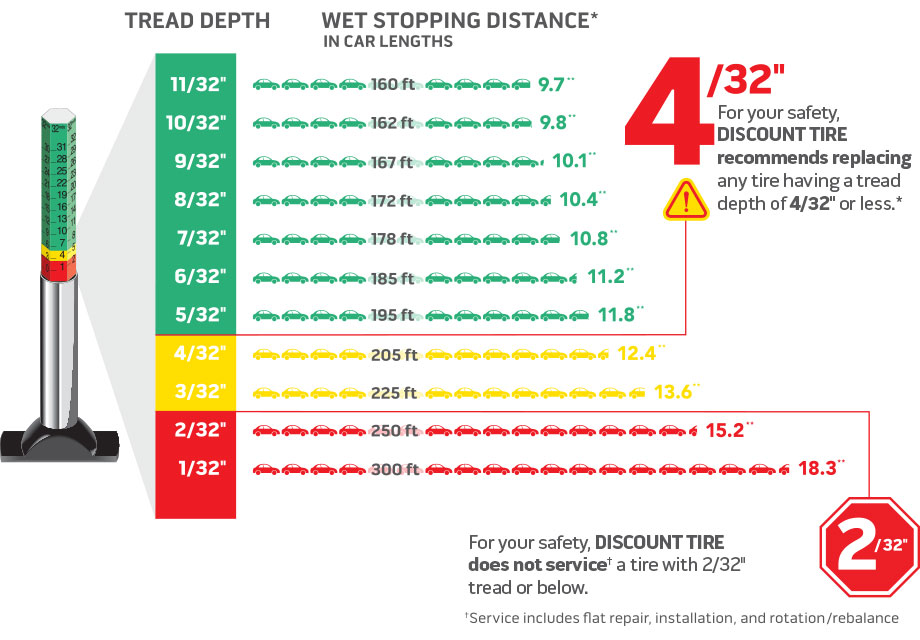
Do... people not rotate their tires or something? EVs are heavier and therefore have more tire-wear. Its probably more important to rotate those tires.
Oil Change + Tire Rotation is pretty typical service. Even if you get rid of oil changes, the tires still should go around-and-round.
The front tires has more weight (especially when braking: the weight shifts forward due to momentum). If you want the front tires to perform better, you need to have longer treads / less-worn-out tires, especially in wet weather.
BMW recommends not rotating tires on performance vehicles, since back and front tires are different anyways. I guess that means we are just going to have less life on our tires, but regenerative braking should help at least.
A lot of this is dependent on where you live. I live in a less dense area than most.
My local shops generally have loaners available, and if not, their courtesy cars will drive you anywhere within a reasonable distance if you need to get home or to work. Ford dealer has driven me the 40 minutes home and then come back to pick me up when the car was ready. They also have "drive through" service for oil changes and simple stuff like that if you don't want to be bothered making an appointment.
It takes me about 1-hour to change my own oil for $35. I do full synthetic because why not? (Conventional oil would be like $28 but... spending the extra money for nicer oil is is so cheap anyway...)
EDIT: The only reason it takes me 1-hour to change my oil is that I also do my own tire-rotations at the same time. The oil change is... really easy.
> Also, a well equipped Prius is like $40k nowadays if you haven’t checked the prices lately.
I never dreamed about buying a BMW until the i4 came out. Their ICEs just scare me, and I believe one day oil changes. But the i4 doesn’t really require much service at all, maybe new tires eventually. It makes owning a German car feasible.
But if you go with a reliable Honda or Toyota (or their luxury up brands), owning an ICE isn't that much of a hassle.
Have to add a different perspective here (the management one), just to try to give a potential explanation. I did pretty much the same thing to my team, though with a lot more background as to why. We were severely rocked by a Google search ranking update, and basically lost 70% of traffic overnight. We had no idea why, none of our metrics over the past years changed, but it all went to shit. In the days after, we set out a plan to try to recover this ranking, even though we had no idea what we need to do. Page speed was one of those metrics we set out to improve, and even though it wasn't bad, but it wasn't exceptional. As with other SEO stuff, there was no guarantee this will help, but we needed to try, along with a few other things. After we fixed it (along with a few other things), there was very small growth initially, and it took another 9 months for our SEO to fully recover, but we did fully recover. Was it Page speed? Who knows, but 30 million website visits were earned back one way or another.
I can easily see from an employee's perspective, they could react like you, "why the hell am I doing page speed shit, we're already fine, this is bullshit". Especially because the entire field of SEO sounds like total random guesswork to a lot of engineers. But I expect the team to have the common sense not to completely fuck up the product in the mean time and/or fake results, even if the metric we're measuring and improving is page speed. I don't think that's an OKR issue, that's just not giving a shit issue that no management approach can solve (on both sides, since the management spent no time explaining why page speed is important to improve).
A lot of the changes just don't make any sense? Some of the features removed:
- Using your voice to send an email, video or audio message. You can still make calls and send text messages
- Rescheduling an event in Google Calendar with your voice. You can still schedule a new event.
- Asking to take certain actions by voice, such as send a payment, make a reservation, or post to social media. You can still ask Assistant to open your installed apps.
- Asking to meditate with Calm. You can still ask for meditation options with media providers such as YouTube.
All of these seem to fall under the umbrella of "features that actually make the assistant an assistant"/connecting the assistant to other apps, which I imagine is exactly the opposite of where the Assistant trend is going, especially with LLMs. Just speaking to a device about which action you want to take and not needing to think which app you need to open and navigate feels like the UX of the future, whatever this is seems like the opposite.
My guess is that a lot of these features are hard-coded, and they are deprecating them in order to replace them with a more generic LLM-based assistant.
Perhaps, but it seems like a strange approach. I would assume they would retain these features and then gradually replace each one with an LLM-based approach.
They are probably statistically some of the lesser used features and since there were layoffs in Assistant ( https://news.ycombinator.com/item?id=38947224 ) they are probably looking to shrink the codebase being maintained.
Assistant has trained our household into thinking that its pretty limited in what it can do so everyone in our home only uses it for basic things. Since Google's assistant can't accomplish more than most basic tasks people don't use more than the basic tasks. No one wants to learn the appropriate subset of English to speak the Google assistant dialect. You really need the voice assistants to be reliable and basic or extremely capable. There is no real middle ground here for most users.
Hopefully once LLMs get more integrated with voice assistants we will move more towards the extremely capable side of the spectrum.
Just because an LLM can better parse what you're saying it does not mean the business logic to act on it exists. The feature discoverability and churn problem will still exist.
This feature already exists for LLM's -- you can provide them with the list of actions that it can do. This is how you integrate with an API. You describe your "turn on the lights" endpoint and so when you say "I need a bit more light" and it knows it can do something about it.
The users of LLM-based products don't know that; its programmers do. And what happens when an integration is added or removed; how is the user supposed to know?
So, a programmer with LLM knowledge will have a startup idea to wrap all of this up in a nice little app. You say "turn on the lights", the app passes that to the LLM.
The LLM, having been pre trained on what to do, calls the API to turn on the lights.
Or it means the torque specs were a little too low, or too high and stripped, or the bolt threading was defective/spec’d wrong. Or bad metallurgy. Or the spec didn’t specify which order to tighten the bolts, so which direction you go causes different outcomes.
Lots of stuff is assembled consistently and carefully “wrong”, but as specified.
It could also mean their torque wrenches are not being properly calibrated and traced, and have become out of spec. Out of college I worked as a mechanical engineer at a torque testing firm. We made devices with high quality torque sensors which are calibrated against NIST certified weights every 3-6 months, and those sensors are supposed to be used to check every single torque wrench both before and after each work shift to ensure they are accurate. Someone could choose to ignore that process, if they were sloppily cutting costs.
That lock nut may not have lined up correctly for some reason and was backed off a bit to get the pin in? That could make it torqued under spec. But also, it doesn't look like that bolt clamps anything so it may not matter if it was a little "loose"..
Are you looking at the center nut in the photo that's cotter pinned in place, or the two over on the right side that appear to be "loosely threaded on at best, washer rattling along the shaft"?
The center one doesn't concern me. The two that aren't even finger tight do.
I was and missed everyone was talking about those other bolts in this particular case.
Those are much more problematic as the remaining tight bolts could fail leading to a cascade. Though, would expect the flange to still be connected to the post in the aftermath images and the upper pins .. how did they get out of the track?
I wish we had close up pics of all the bits in the airframe opening.
Some part of the process -- anywhere from specs to assembly-- had some cost cutting that led to the outcome. The root cause of this problem is something financially motivated.
While I don’t disagree with you that it is possible, it isn’t a very “engineering” approach to declare that is the case without doing a root cause analysis. Stating it as fact is as bad as the MBAs…
Cost cutting could have been a factor. Or the root cause might have been something entirely different.
It's quite possible to choose to spend more money on a process or method you believe is higher quality, but still discover it has some specific problem that the previous cheaper version didn't.
Well they left a ladder in the tail of a plane during assembly in the not distant past. It's not like just a couple screws or washers were left behind to rattle around.
An ex worked on a QA-type project related to production for them. It makes me wonder if some of the issues were more fundamental than that project could ever have addressed.
What's crazy to me is that these things do not roll of the factory line in large numbers. If it was a car plant or some other line where large numbers come off per shift, you could find that possibly one operator for one shift set their torque wrench to the wrong setting causing the finished items for that shift to be suspect. But seeing as not one plane rolls of the floor per shift, this is much more systemic like possibly the documentation was wrong or similar where it is persistently done incorrectly. Or maybe just the one plane for that one day that the worker incorrectly set their torque wrench that day.
It can be opposite of your interpretation too. If you make 100,000 cars in a year, each step is done at least 100,000 times and it's justified to have a single wrench, with single non-adjustable torque value, and automated datalogging of applied value for a particular step. Or even a robotic process. Maybe even computer vision to check fastener length.
If you make 10 or 500 planes in a year, you have to rely on multiple people to use multiple torque wrenches, with multiple attachments, to follow multiple procedures to assemble multiple planes using fasteners of multiple lengths, nearby multiple other processes and people. There is a big emphasis on procedures and traceability but there are still so many potential failure points that can go undiscovered for a long time.
When a junior software engineer drops a table in production, we don’t say the junior engineer was sloppy. We say the protections and process in place were bad.
I don’t like how the sentence in this parent comment blames individuals for process problems.
Those don’t sound very reassuring either. What’s to say that this is the only bolt with incorrect torque spec, or if this part is bad why not others, and if bad parts are not being caught during quality control then what other parts will be next to fail prematurely? And if there are unexpected vibrations in that area, why wasn’t it discovered during test flights? What other vibration issues would they not have accounted for if they weren’t capable of detecting this one?
To be fair, I read recently that another issue with MAX 7 was discovered through flight testing. The issue is that now Boeing wants to exempt plane from safety rules…
It's a cliche thing to say, but if it was a known issue and management papered over it - as the alternative is incompetent engineering instead of just cost-center-managed engineering - someone should go jail?
Nah. When you have an engineering culture problem, putting people in jail is not going to solve anything. It will scare employees, sure, but it won't fix your culture.
I believe someone at Boeing actually was criminally prosecuted in connection with the earlier MAX 8 problems, but, as in all these situations, it is seriously unlikely that that fixed any actual problems. Most likely, somebody felt they needed a neck to wring and found a convenient scapegoat.
For those who will click directly into the comments:
The US GOVERNMENT (not the US as a whole) spent more on health care ($1.8 trillion) to provide non-universal healthcare than 6 European countries with a combined population similar to the US did ($1.2 trillion) to provide universal healthcare.
The article's premise being, it costs the government significantly more per person, and 50% more in total to run a non-universal healthcare system serving a subset of the population, than it does a universal healthcare system which covers everyone.
As a whole, the US spent $4.5 trillion (private+public).
We spend more via taxes than any other country spends total... and then we tack private spending on top of that. We've picked the least efficient, worst aspects of both types.
The US has a significant higher percentage of obese people[1] than the EU countries they combined. Obesity is known to be a significant risk factor for a large number of health issues[2].
Eyeballing an average of 25% obesity among the EU countries with the US having 36%, means the US has 44% more obese people per capita.
While that doesn't explain all of it, it surely is a significant contributing factor.
Not if those lives are ending due to extreme medical conditions. From a costing perspective there's not a big difference if you spend the last 5 years of your life in critical care at age 72 vs. 85
Reducing obesity is part of our public health goals in Europe though, so the fact we have lower obesity in universal health system countries is likely not entirely an accident.
Obesity is a failure of preventive healthcare - more like a consequence than a cause of inefficiency, lower coverage and higher spending. And prevention doesn’t start at doctor‘s office.
it's also a symptom of extreme poverty. Very few people in the US starve to death but they certainly don't get healthy diets, the capacity to exercise and the education & access needed to control obesity.
How does this compare to European smoking? In Europe there are a lot more smokers than last time I checked in the US. Smoking causes similar health issues as obesity, mainly cardiovascular events.
If the US could improve their food, or Europe could get rid of smoking, it would be a big jump in health outcomes for either.
I think obesity probably explains a lot of the cost difference which is why people are so excited about drugs like Ozempic. It may make financial sense for the government to cover the cost for everyone since it could end up lowering overall healthcare costs by a significant amount.
Surely food companies will just stand idly by as their revenues drop 20-30%
Surely they wouldn’t figure out a way to produce even less nutritious, less satiating, more flavorful (and therefore calorically dense) foods, would they?
Well i feel like that's only good up to a point right? We can legislate the extremely unhealthy stuff like we have started already. Public information campaigns are making more and more people vegetarian and vegan or at least some reduced-shit diet, healthy at every size and the fat acceptance movement fell flat on its face and was replaced with the much more healthy imaged body positivity movement. And what are they gonna do, make our chips literally dripping in bacon grease? Honestly might be better for us than the insane amounts of sugar they put in things these days. I hesitate to say this but, how much worse can it really get?
Removing food stamps and just giving people money instead is a good start. Poor people without food stamps are healthier than poor people with food stamps, so I don't see any reason to keep that system, it seems to just encourage poor people to buy too much junk food.
With hundreds of billions of dollars per year on the line? I’m certainly open to arguments as to how it can’t get worse, but that’s a pretty obscene incentive to make it worse.
No, but at some point there will be a reckoning just like with cigarettes and alcohol. Garbage food won't go away, but the individual and societal costs will eventually be recognized.
If we had pills you could take that would mitigate most of the downsides of cigarettes and alcohol, then no we wouldn’t. Then the question would be whether cigarette and alcohol manufacturers could innovate their way around those mitigations. I don’t know that’s possible with cigarettes, alcohol, or food, but food especially it seems very possible.
Also cigarettes and alcohol don’t crowd out healthier alternatives on retail shelves the way that unhealthy foods crowd out healthier ones.
People already take all sorts of drugs forever, and it's only designer today. There are other similar drugs in development, so cost will come down.
Drugs like Ozempic don't just work on obesity, but they look like they may also work on addiction in general. There's also the second order healthcare costs of obesity that people don't think about - knee replacements for example. I think you're underestimating how much money would be saved in healthcare by reducing obesity rates.
pure capitalism is not an answer to the USA, especially with the system which allows lobbying of any type.
lobby + pure capitalism is creating a system where anyone who has more money can push ideas to make even more money and use an excuse that this is a free market balanced by supply/demand, because pushing many millions to lobby their ideas is not trivial or almost impossible sometimes.
It's clearly intended to weed out third party apps, same as Twitter. I have a pet theory that all the companies doing this are converging on the same long term plan - kill third party apps, have premium subscriptions (Facebook recently launched one too), and then give the users the choice - use the service for free, with forced opt-in into personalized marketing, sharing data with 3rd parties, or pay for premium.
There's legal precedent already in Europe that this is fine by GDPR rules, as long as the price of the subscription is "reasonable".
That way they get to preserve (or even improve) their ad targeting business, on the assumption that most users will just choose selling their data over a subscription. And if they go for a subscription, even better. In a sense, let the market decide the value of privacy.
The first step in this would obviously be killing any third party alternatives that would be the first place of refuge when they make that move.
In any case, a pet theory, but there's been a strange convergence by these big companies and the way they're changing their business models.
I feel you, and where the algorithm is completely insane for me is in the YouTube Shorts section. I literally get the same videos in the same order multiple times during the week. It makes it feel like there's about 100-200 videos in total on Shorts, and I've seen them all. As a rip-off version of TikTok, where there's an endless stream of new content, you would imagine discovery would be the thing they would focus on in the algorithm the most.


From that perspective, Trump loves money, loves deregulation, and will open the door for whatever dystopian play if it provides enough benefits to him, so it only makes sense for him to be more favoured.
All that will come from this will be more evidence to how power corrupts everyone, and a lot of money made.